 English
 Greek
Greek German
 Russian
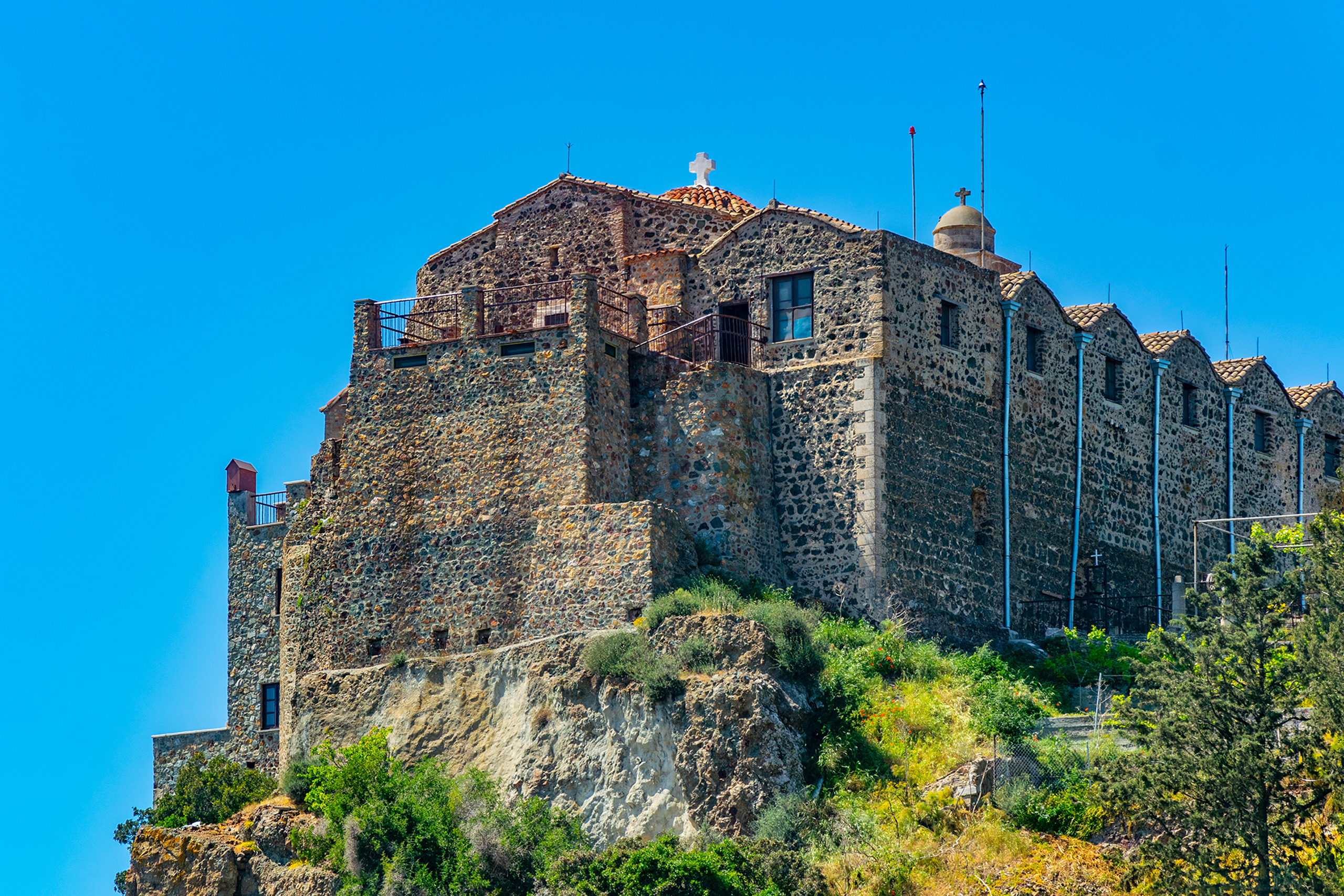
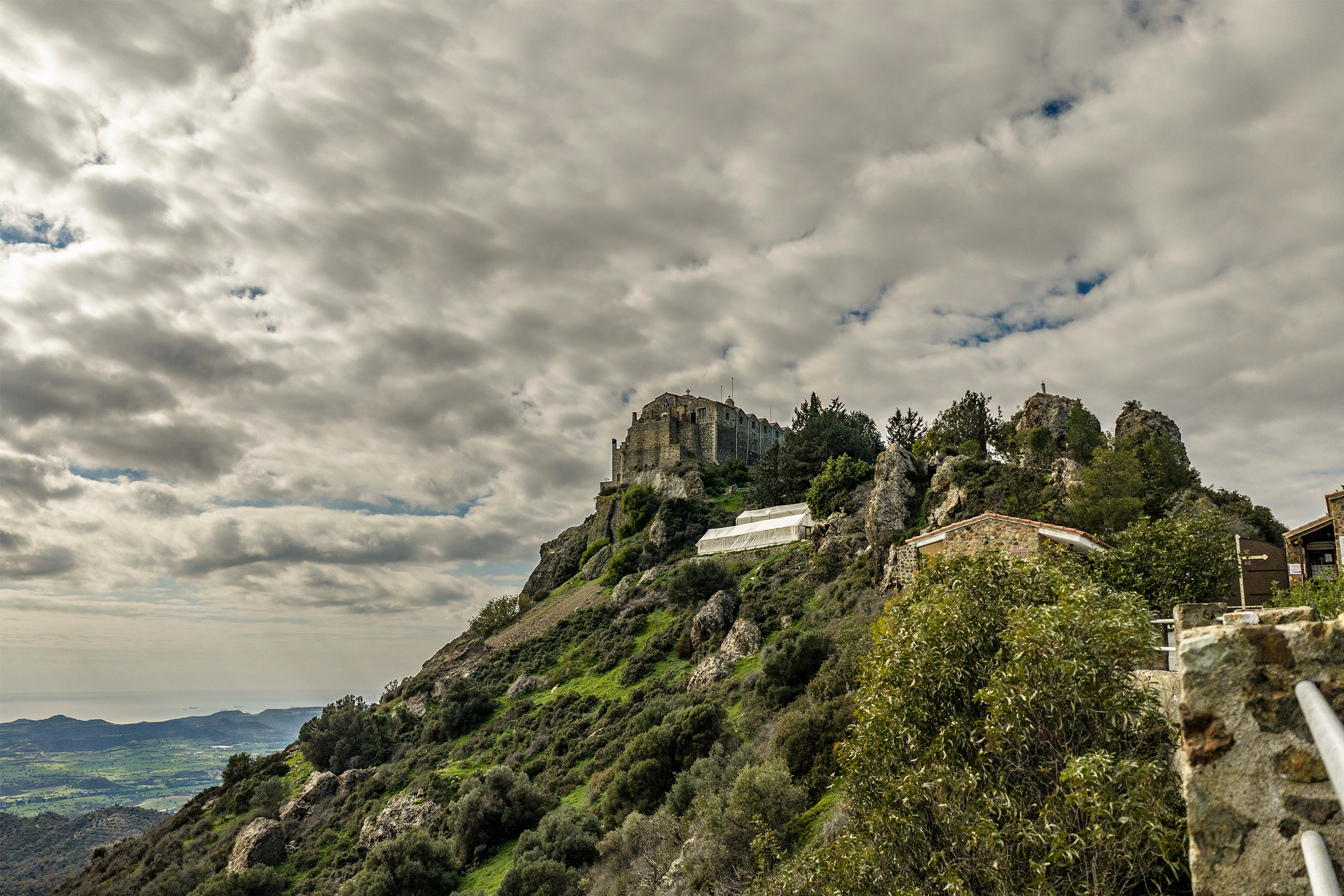
Rising 689 meters above the Mesaoria plain, Mount Stavrovouni has been a sacred site for over 2,000 years. The name derives from two Greek words: stavros (cross) and vouno (mountain), literally meaning “Mountain of the Cross.” The monastery follows the strict ascetic rule of Saint Basil and maintains traditions similar to those of Mount Athos in Greece.
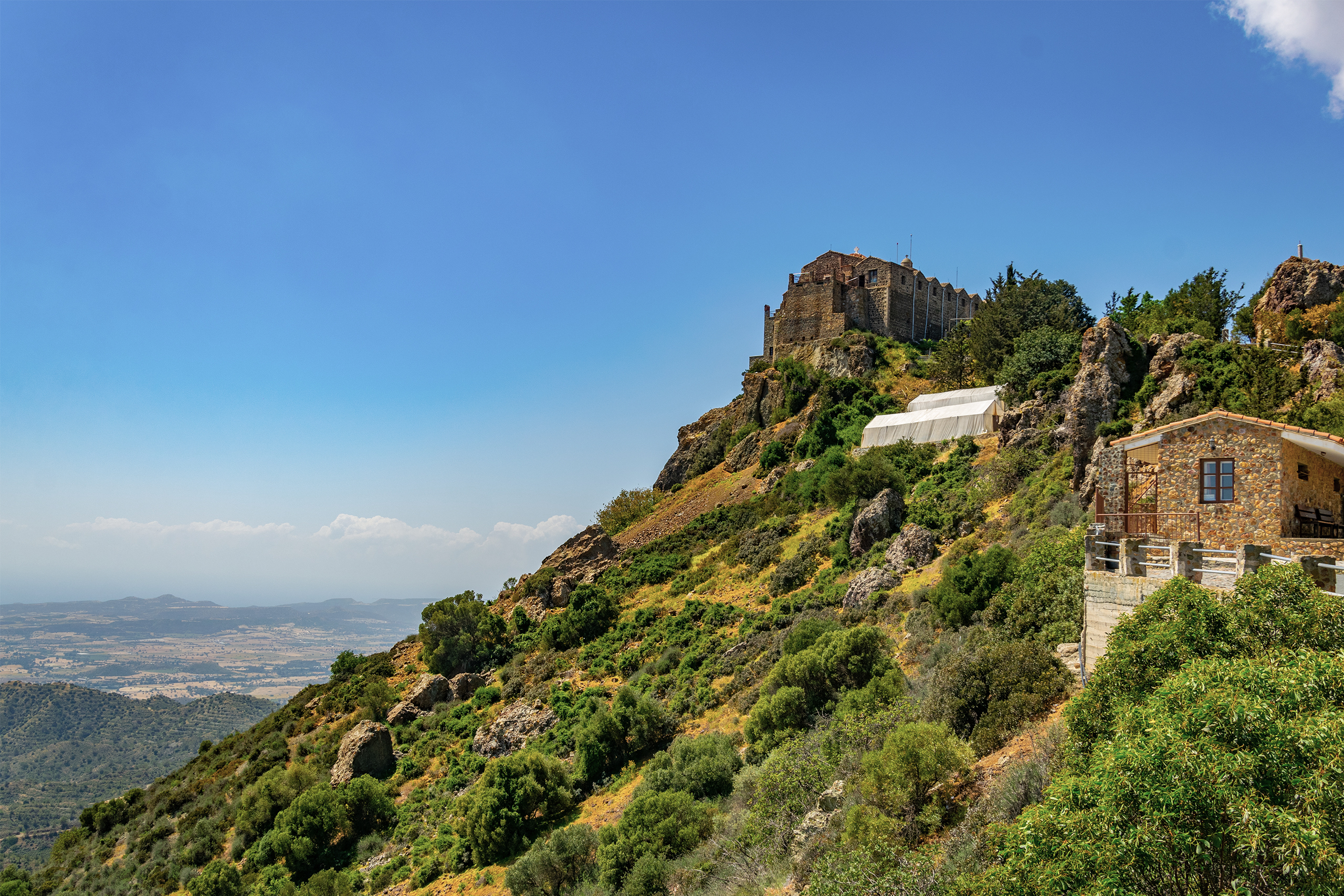
The site is recognized as the earliest documented monastery in Cyprus. The oldest written reference appears in Byzantine records from the 4th century and confirms its establishment as a major religious center. A Russian monk named Abbot Daniel visited in 1106 and left detailed accounts of the monastery and its sacred relics in his travel memoirs.
The monastery operates as a working religious community with approximately 20 monks dedicated to lifelong ascetic principles. Following Mount Athos traditions, the monastery prohibits women from entering its grounds, though female visitors can access the nearby chapel of Agia Varvara at the mountain’s base.
Historical Background
According to tradition, Saint Helena founded Stavrovouni Monastery between 327 and 329 AD, following her attendance at the First Ecumenical Council of Nicaea in 325 AD. On a pilgrimage to Jerusalem, she discovered the three crosses used in the crucifixion of Jesus and the two thieves, excavated them, and planned to transport them to Constantinople.
On her return to Constantinople, Helena’s ship encountered a storm and made an unexpected stop in Cyprus. According to the 15th-century Cypriot chronicler Leontios Makhairas, a miraculous event occurred during this stop. The cross of the Good Thief was reportedly transferred overnight to the peak of a mountain, emitting a strong light and levitating in the air by divine power.
After several failed attempts to retrieve the cross, Helena decided to leave a fragment on the mountain and built a small chapel to house it. This made Stavrovouni one of the oldest monasteries in the world, contemporary with Saint Anthony’s Monastery in Egypt (356 AD) and Saint Catherine’s Monastery in Sinai (565 AD).
The monastery preserves relics of immense significance, including a piece of the True Cross, the Cross of the Good Thief, one of the Holy Nails used in the crucifixion, and a portion of the rope believed to have bound Jesus. It also holds two small chains worn by Saint Panaretos, Bishop of Paphos, which remained in contact with his body during his lifetime.
The Pre-Christian Sacred Site
Before Christianity, Mount Stavrovouni was called Mount Olympus and was a pagan sacred site. Archaeological evidence suggests that a temple once stood on the mountain, possibly dedicated to Aphrodite or Zeus. Two ancient limestone statues found in the monastery area support this idea and show that the mountain was used for religious purposes for many centuries.
The location of the Christian monastery likely followed a common early practice of building on pagan sacred sites. By choosing a place already seen as holy, Christianity could connect with older traditions while replacing pagan worship with Christian devotion.
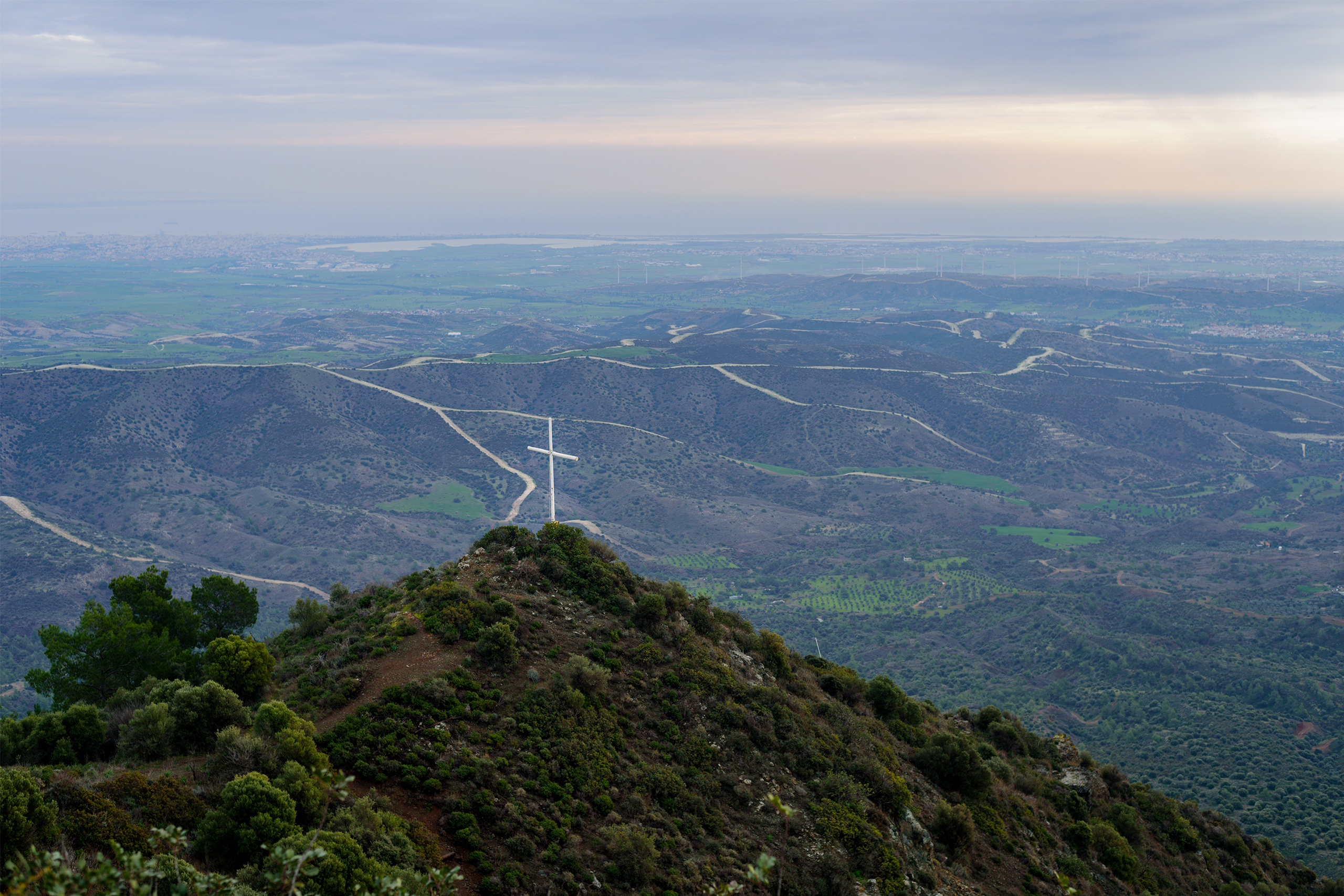
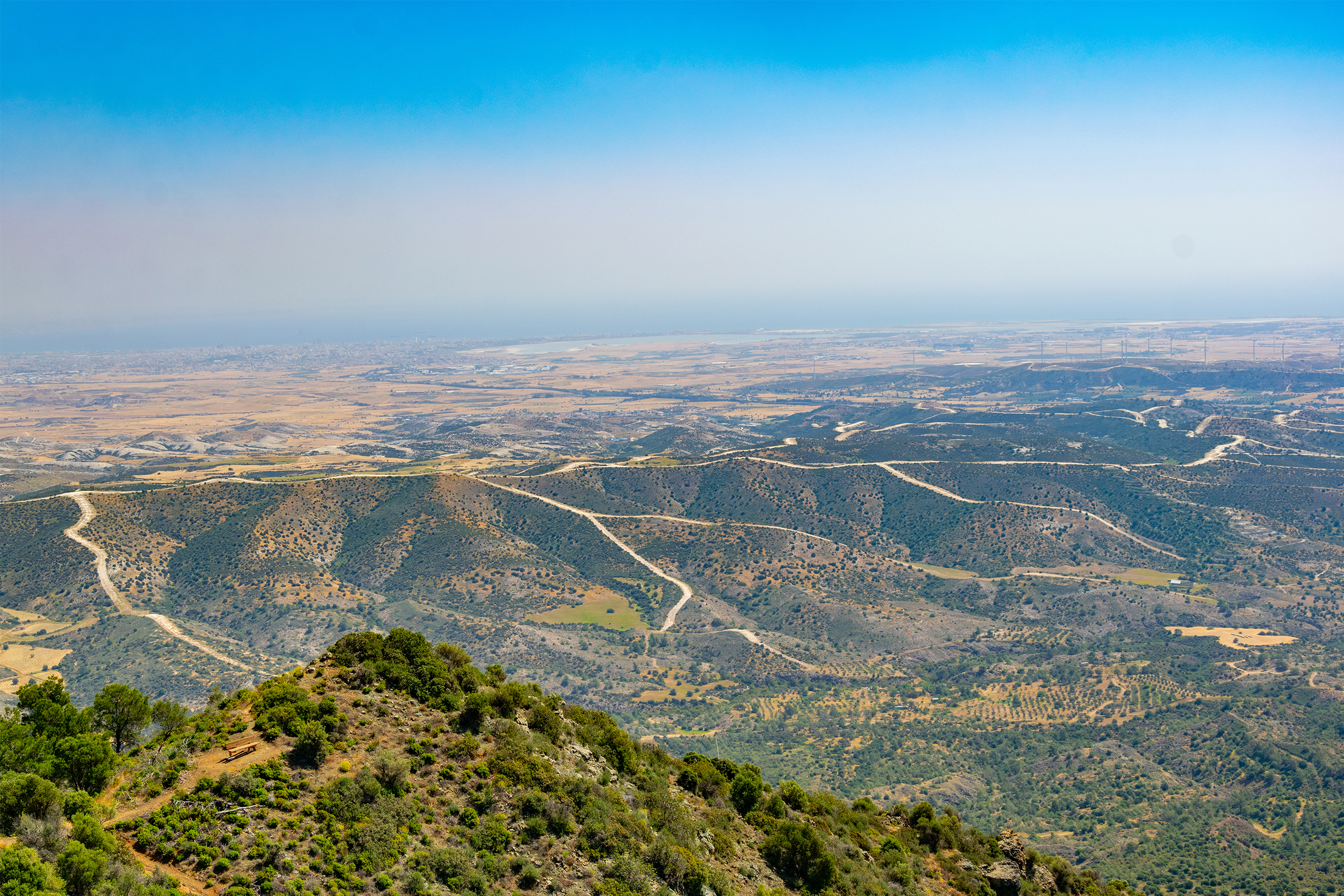
The mountain’s height and isolation made it perfect for monastic life. Medieval visitors recorded that on very clear days, one could see as far as Lebanon from the peak. The views also stretch across Famagusta to the east, the Troodos Mountains to the northwest, Larnaca and its salt lake, and the Mediterranean Sea to the south.
Stavrovouni Monastery went through many periods of destruction and abandonment. In the 7th to 9th centuries, Arab raids attacked the island, affecting the monastery. In 1426, Mamluk forces captured the Cross of the Good Thief during an invasion. Later stories say the cross returned miraculously, but it was eventually lost for good.
The Ottoman conquest of Cyprus in 1570-1571 was the monastery’s darkest period. Ottoman soldiers destroyed the buildings, and the monastery was mostly abandoned from 1571 until the 19th century. The main relic, a large fragment of the True Cross, disappeared by 1598, likely during this time. Only a small piece survived and is now kept in a 1.2-meter solid silver cross.
Even when abandoned, hermits continued to live on the mountain occasionally. In the 18th century, Russian monk Vasil Grigorovich-Barsky recorded that some hermits still stayed there. Monks briefly returned around 1670, but the monastery mostly remained in ruins.
In 1821, during the Greek War of Independence, the Ottoman governor burned what was left of the monastery in retaliation against the Greek Orthodox population. Later, in 1888, a major fire caused more damage to the partially rebuilt structures.
Revival and Modern Restoration
The monastery began to revive in 1889 when Elder Dionysios I arrived from Mount Athos and restarted communal life. In 1890, three more Cypriot monks joined him: Father Varnavas, who later became abbot, and his brothers Kallinikos and Gregorios. This marked the start of continuous monastic life that continues today.
The monastery remained without modern utilities until 1983, when electricity and running water were finally installed. Before that, monks used rainwater collected in four large cisterns. This simple lifestyle reflected their dedication to traditional ascetic practices.
In 1976, monks from the Monastery of Apostolos Varnavas in the Turkish-occupied north took refuge at Stavrovouni after being displaced by the 1974 Turkish invasion of Cyprus. This strengthened the community and connected the monastery to the island’s modern political history.
Recent renovations fully restored the monastery complex. The small church received new frescoes and icons painted by Father Kallinikos, a Stavrovouni monk and renowned iconographer. The artwork shows the monastery’s legendary history, including Saint Helena in her red garment, the discovery of the True Cross in Jerusalem, a skull beneath Christ’s Cross, and the Deposition scene.
The Monastery Today
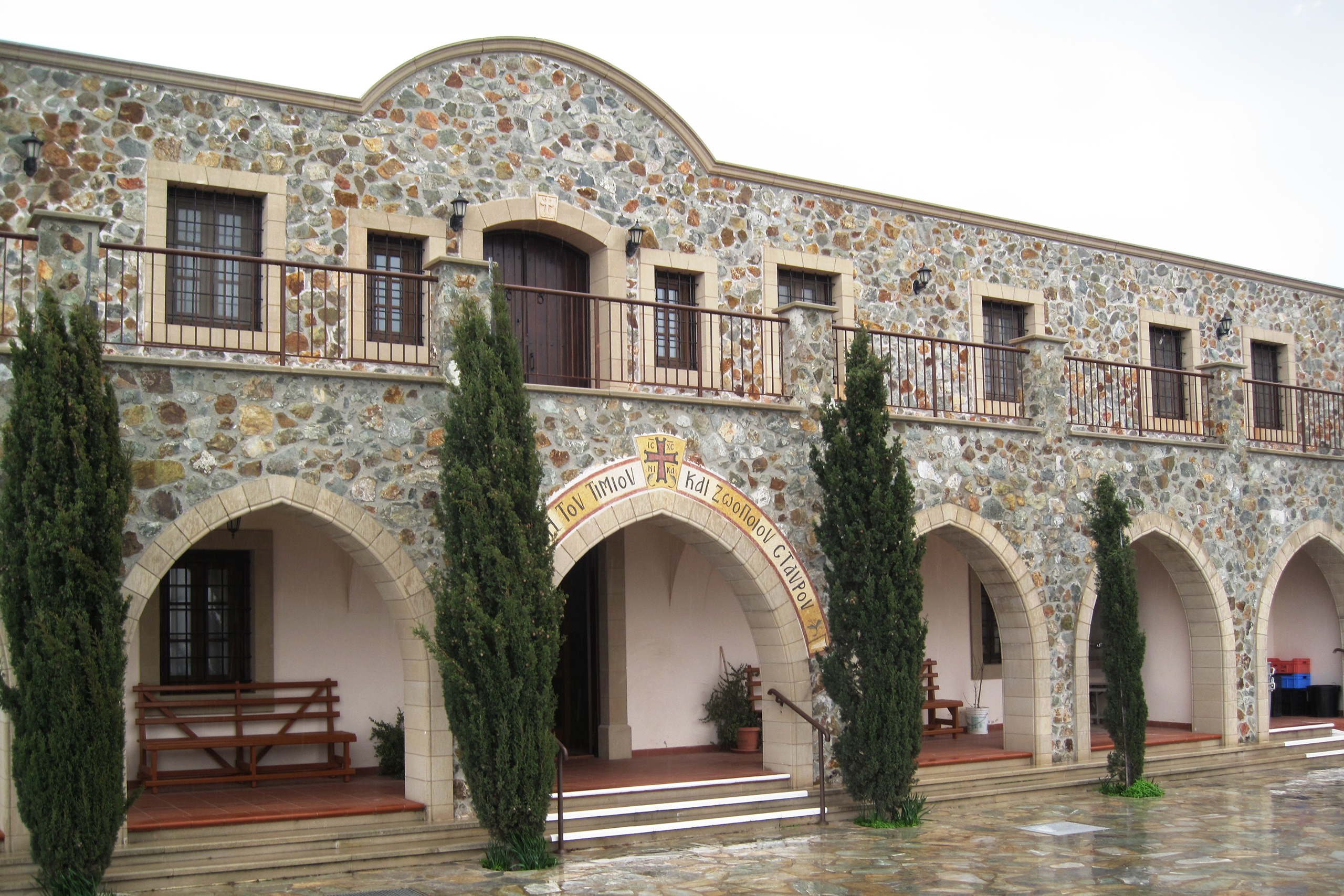
Most of the buildings seen today were rebuilt in the 19th century, with only a few medieval features remaining. The western support wall still shows some Gothic elements, but overall, the monastery reflects 19th-century Orthodox architecture rather than the original Byzantine design.
Every year on September 14th, the monastery celebrates the Universal Exaltation of the Holy Cross. This is the most important feast day, drawing believers from all over Cyprus and beyond for religious ceremonies and celebrations.
Male visitors can enter the monastery during set visiting hours. Photography is not allowed inside, and all visitors must dress modestly, covering shoulders and knees.
The fragment of the True Cross is the monastery’s most important relic. Unlike the larger original piece, which medieval accounts say levitated miraculously, the surviving fragment is now kept in an ornate silver reliquary inside the church.
Visiting Mount Stavrovouni
The monastery is located 40 kilometers from Larnaca, accessible via the Nicosia-Limassol motorway (A1) with a 9-kilometer drive from the main road. The journey itself serves as a transition from the secular world to the sacred space of the monastery.
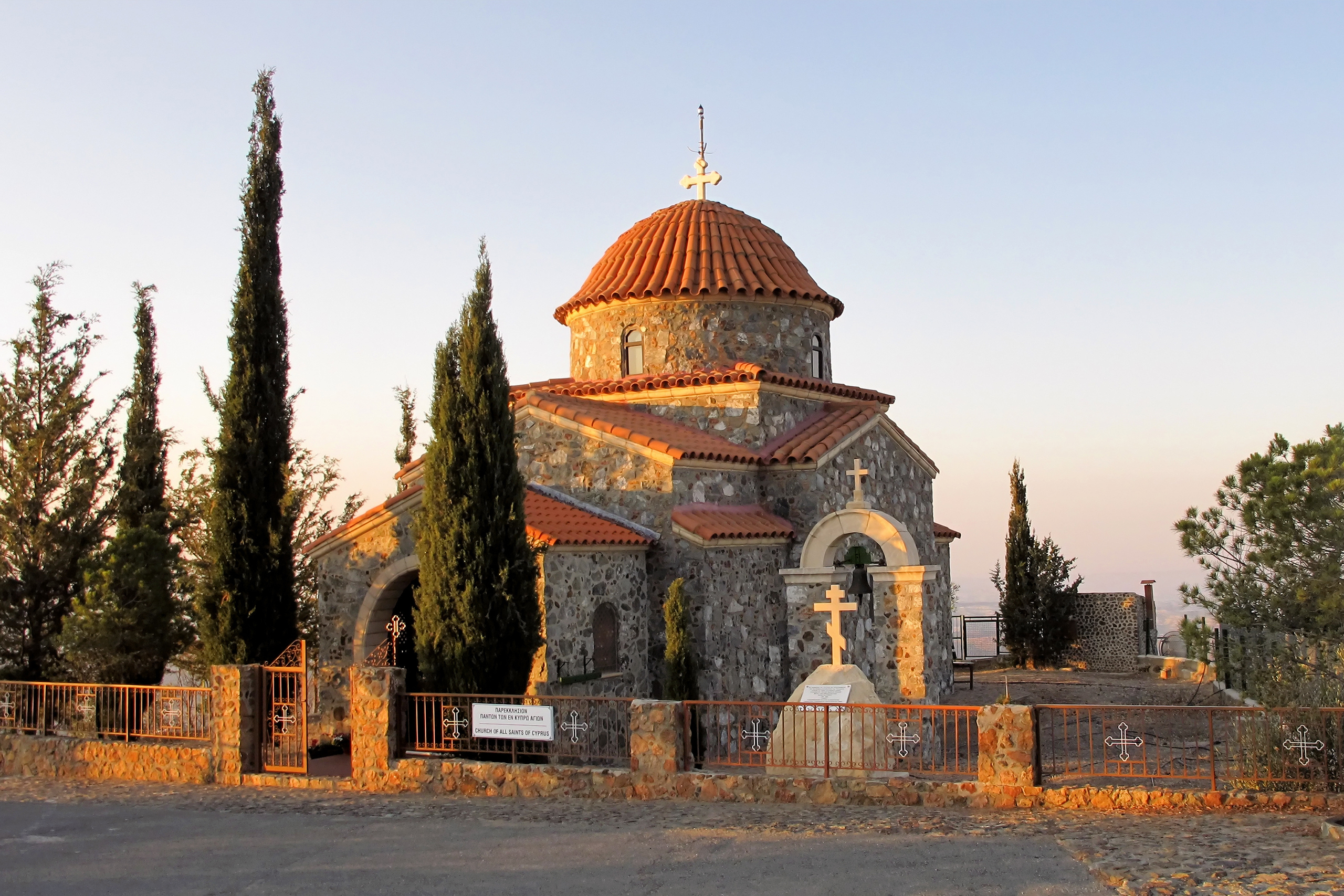
Female visitors should proceed directly to Agia Varvara chapel at the mountain’s base, where monks maintain icon-painting workshops and sell monastery products including honey, olive oil, and icons. The chapel provides a place for women to experience the spiritual atmosphere of Stavrovouni even though they cannot enter the main monastery.
The panoramic views from the mountain justify the trip regardless of access restrictions. The vista encompasses the entire Mesaoria plain, the southern coastline, and, on clear days, extends to distant mountain ranges.
A Mountain That Matters
Stavrovouni matters because it represents continuity of sacred space across different religious traditions. The mountain was holy in pagan times, became Christian in the 4th century, and remains a functioning monastery today. This 2,000-year history of continuous religious significance is rare in the Mediterranean world.
The monastery also embodies Orthodox monasticism’s survival through centuries of persecution, destruction, and hardship. The community’s revival in 1889 after three centuries of abandonment demonstrates the resilience of religious tradition and the determination of believers to preserve sacred sites.
For modern Cyprus, Stavrovouni serves as a spiritual center that transcends the island’s political divisions. Pilgrims from both the Republic of Cyprus and the northern territories visit when possible, making it one of the few places where shared Orthodox heritage bridges contemporary conflicts.