 English
 Greek
Greek German
 Russian
- Historical Background and Spiritual Significance
- Architectural Composition and Structural Evolution
- Interior Decoration and Artistic Layers
- Theological Meaning and Devotional Function
- Cultural Interaction and Historical Context
- Monastic Life and Community Role
- Preservation and World Heritage Recognition
- Conclusion
Historical Background and Spiritual Significance
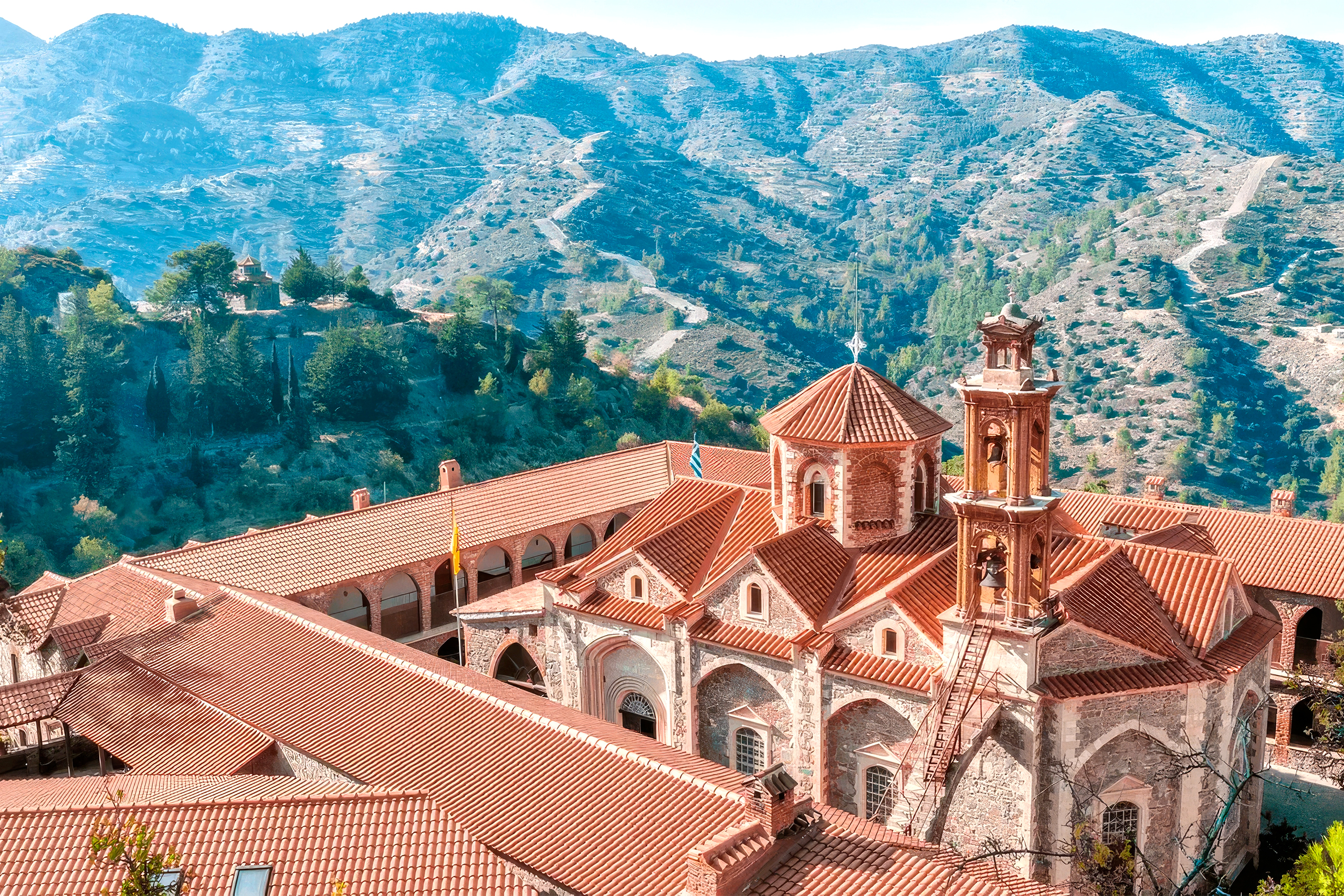
The Monastery of Saint John Lampadistis, located in the Marathasa Valley of the Troodos Mountains near the village of Kalopanayiotis, is one of the most distinctive monuments within the UNESCO World Heritage group known as the Painted Churches of the Troodos Region. Its importance lies not only in its remarkable frescoes but also in its unusual architectural composition. Unlike single-phase churches, this monastic complex combines three interconnected churches built in different periods, all enclosed beneath a later protective roof. This layered structure makes the monastery a rare example of architectural continuity, reflecting the gradual development of religious space in response to changing spiritual, artistic, and community needs.
The monastery is dedicated to Saint John Lampadistis, a local Cypriot saint whose life is associated with piety, endurance, and miraculous healing. According to tradition, he lived in the region during the Byzantine period and became a figure of popular devotion after his death. His tomb within the complex transformed the monastery into a pilgrimage center, attracting worshippers seeking spiritual assistance. The religious importance of the site ensured its continued maintenance and expansion over centuries, leading to the creation of a complex that embodies both local religious tradition and broader Byzantine artistic influence.
Architectural Composition and Structural Evolution
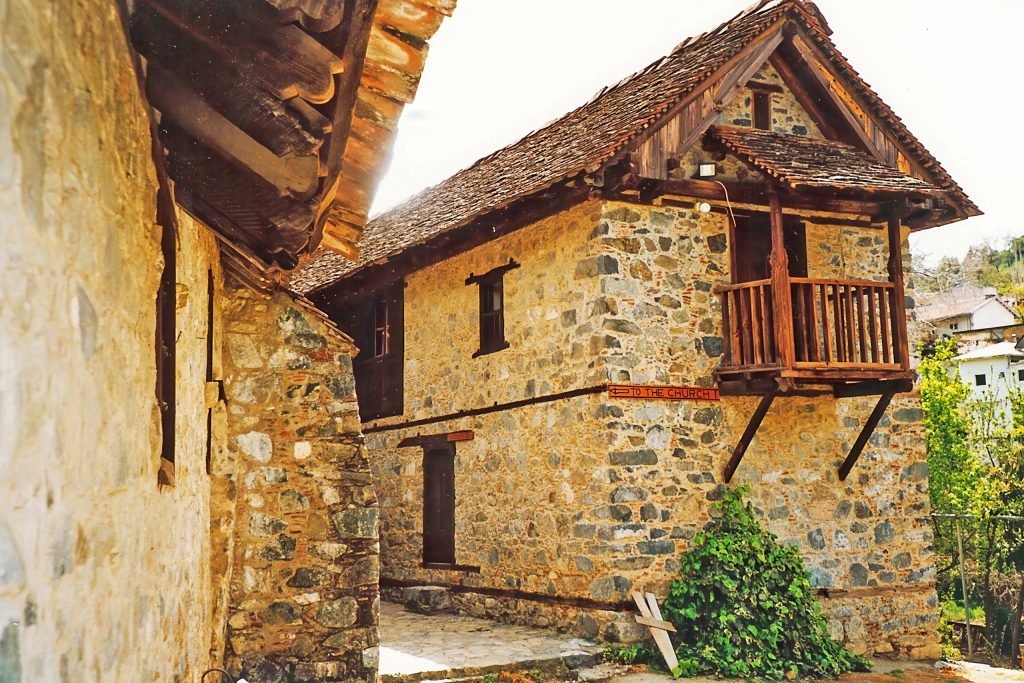
The most remarkable feature of the Monastery of Saint John Lampadistis is the combination of three separate church units that were gradually integrated into a single architectural ensemble. The earliest of these is the Church of Saint Herakleidios, believed to date from the 11th century. This structure follows the typical cross-in-square Byzantine design, with a central dome and symmetrical arms forming a cross. Its form reflects the classical architectural principles of the Middle Byzantine period, emphasizing balance, proportion, and symbolic representation of the heavenly order.
wikipedia-org
Adjacent to it is the Church of Saint John Lampadistis, built later to honor the local saint. This addition reflects a shift toward more personal devotional space, focused on the veneration of relics and pilgrimage. The third component, a Latin chapel added during the period of Frankish or Venetian rule, introduces Western Gothic elements that contrast with the Byzantine core. This chapel illustrates how the complex adapted to new political and cultural circumstances while preserving its earlier sacred structures.
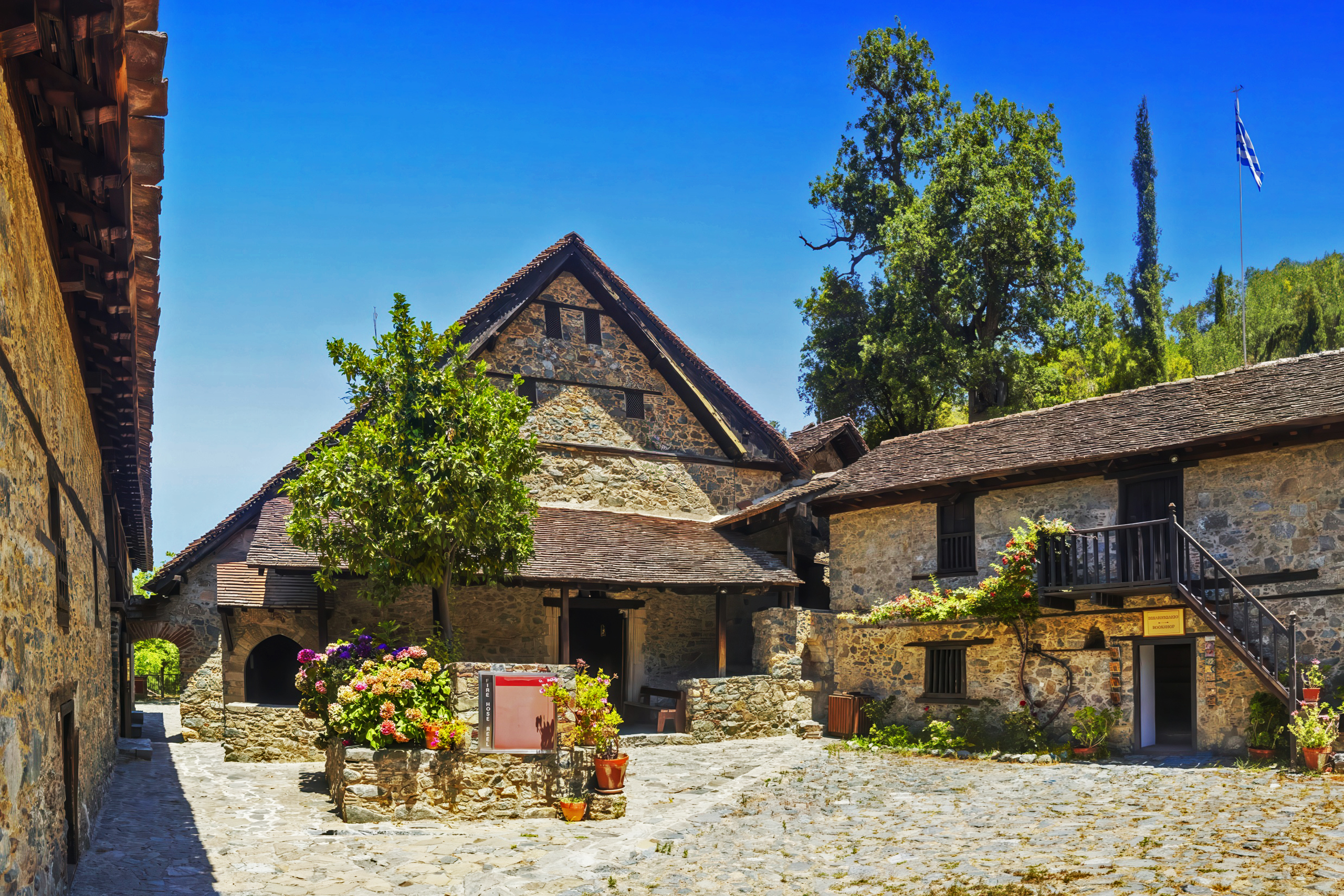
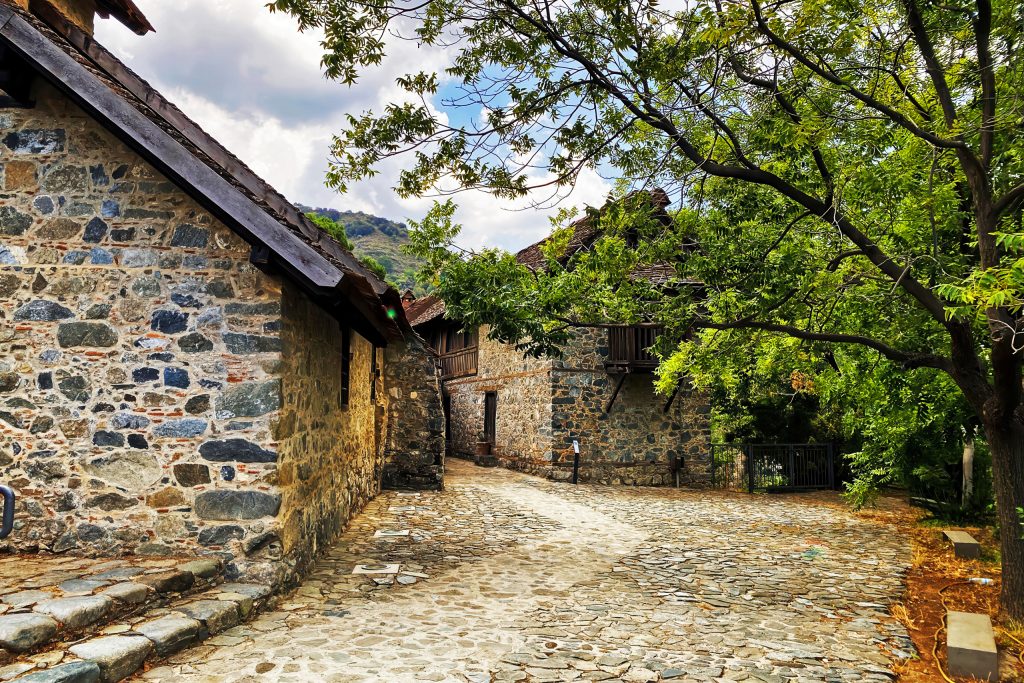
All three churches were eventually covered by a large pitched wooden roof, a feature characteristic of Troodos mountain architecture. This outer roof protected the buildings from harsh weather and visually unified the complex. The result is an architectural record of evolution, where successive periods left visible marks without erasing earlier phases. The monastery therefore functions as a physical timeline of religious architecture on the island.
Interior Decoration and Artistic Layers
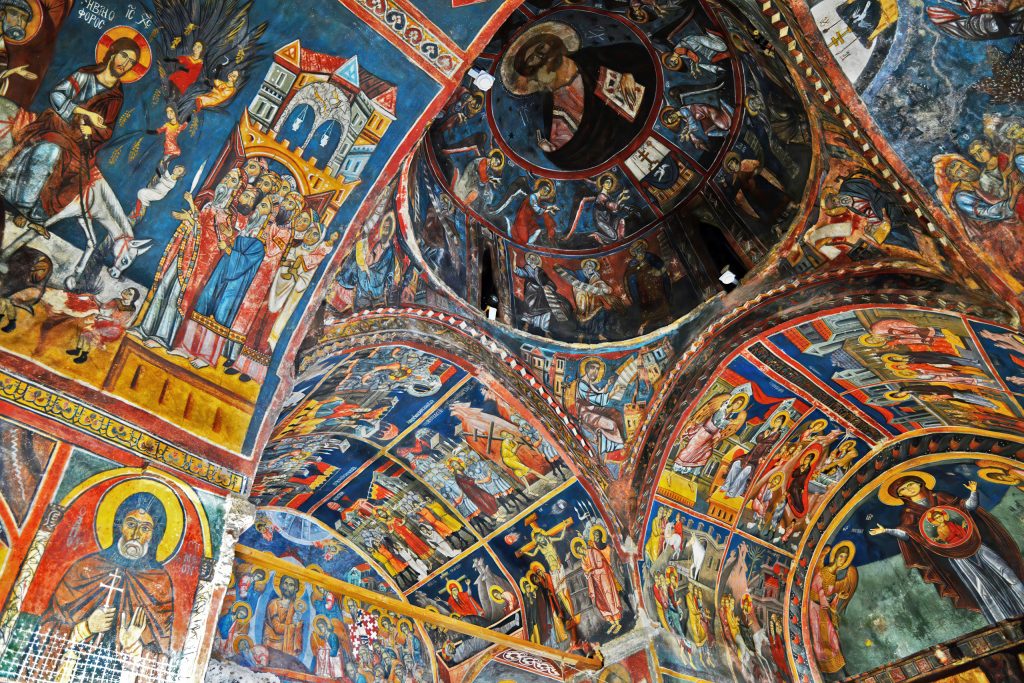
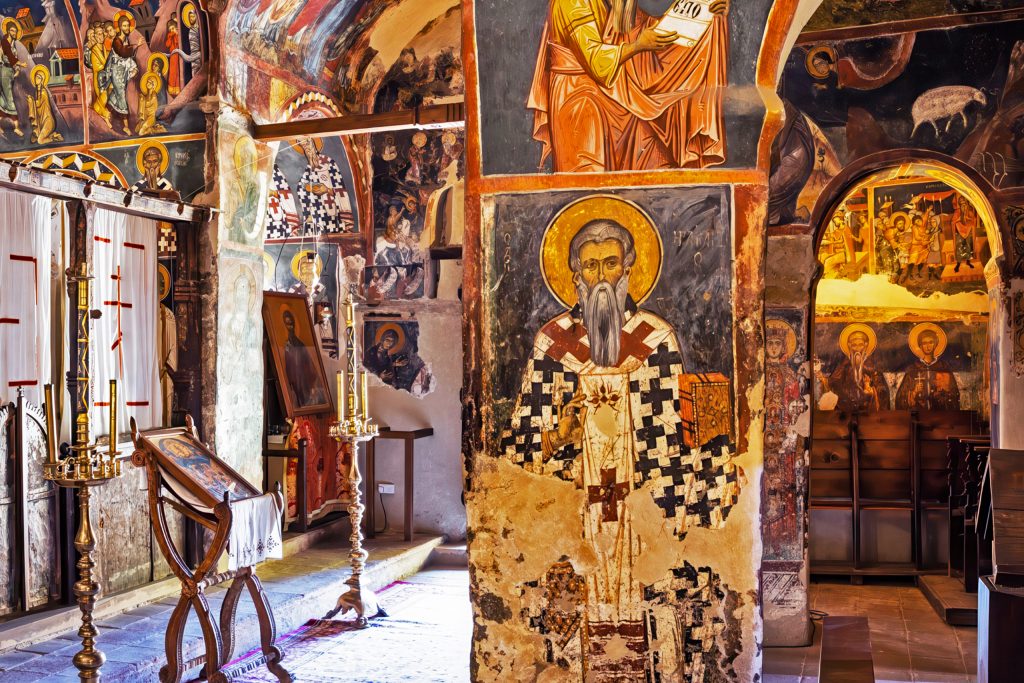
The frescoes within the Monastery of Saint John Lampadistis are as diverse as its architecture, reflecting different artistic periods and influences. The earliest paintings in the Church of Saint Herakleidios date to the 11th century and exhibit the restrained elegance typical of Middle Byzantine art. Figures are solemn, composed, and hieratic, emphasizing spiritual authority over physical realism. These frescoes establish the theological foundation of the space, presenting Christ, the Virgin Mary, and saints within a structured celestial hierarchy.
tripadvisor-com.
Later paintings in the Church of Saint John Lampadistis introduce more narrative detail and expressive movement, reflecting developments in Byzantine art during the 12th and 13th centuries. The imagery becomes more dynamic, with greater attention to emotional interaction and storytelling. This shift corresponds with broader artistic trends in the Byzantine world, where painters sought to deepen spiritual engagement through more relatable human expression.
journals-openedition-org
The Latin chapel contains frescoes influenced by Western artistic traditions, including stylistic features associated with Gothic art. These paintings demonstrate the cultural interaction that occurred in Cyprus during periods of Western political control. Despite differences in style, the frescoes across the complex maintain a shared devotional purpose, creating a visual dialogue between Eastern and Western Christian traditions.
Theological Meaning and Devotional Function
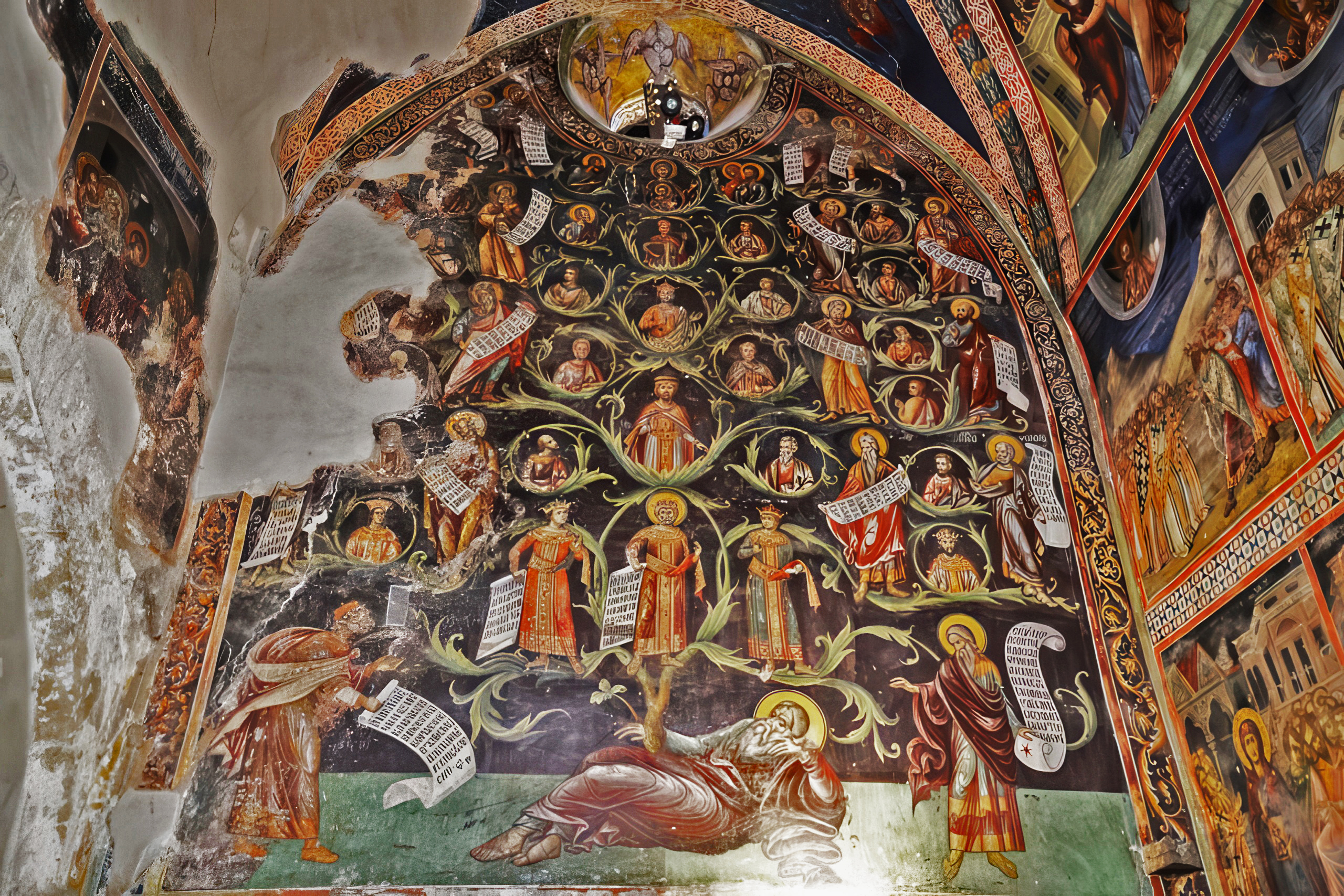
The iconographic programs of the monastery’s churches reflect Orthodox theological principles, emphasizing themes of incarnation, redemption, and intercession. Christ Pantokrator appears in domes and vaults, symbolizing divine authority, while narrative cycles illustrate key events from the life of Christ and the Virgin Mary. Saints occupy prominent positions, linking worshippers to the heavenly community and reinforcing the monastery’s role as a place of spiritual mediation.
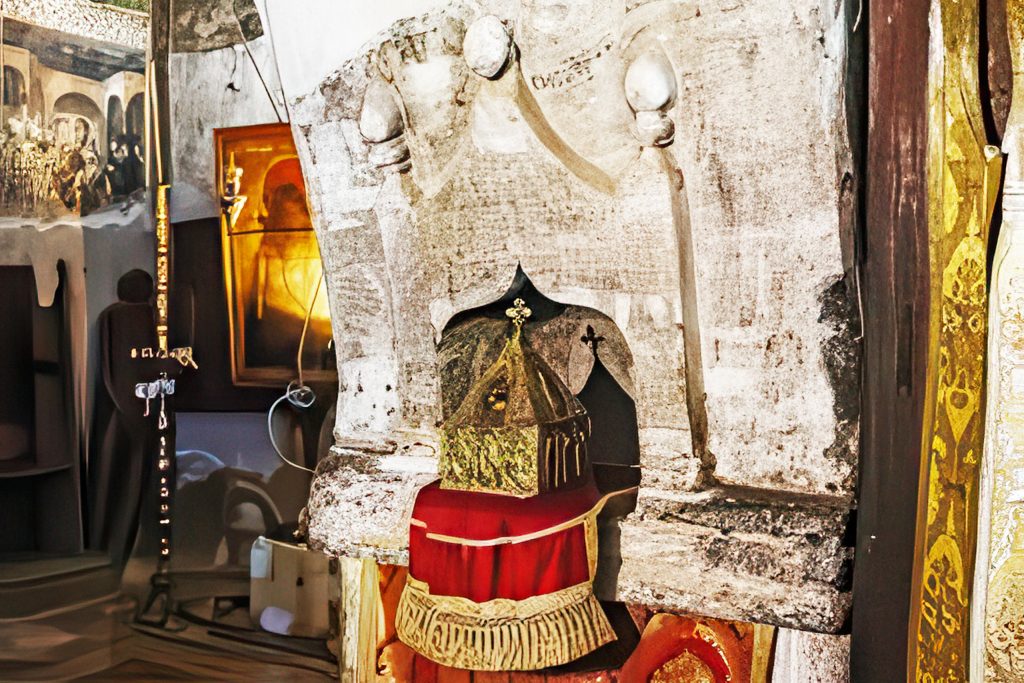
The presence of Saint John Lampadistis’s tomb added a personal dimension to the complex’s devotional life. Pilgrims visiting the monastery sought healing and protection, believing in the saint’s intercessory power. This focus on a local holy figure illustrates how universal Christian theology was expressed through regional traditions. The architecture and frescoes together created an environment where spiritual history and personal devotion were inseparable.
Cultural Interaction and Historical Context
The architectural and artistic diversity of the monastery reflects Cyprus’s complex historical position between East and West. During the medieval period, the island experienced Byzantine, Frankish, and Venetian rule, each leaving cultural and artistic influences. The coexistence of Byzantine and Western elements within a single complex demonstrates how religious spaces adapted without losing continuity. Rather than replacing earlier traditions, new additions expanded the monastery’s visual and spiritual language.
facebook-com
This blending of influences highlights the role of Cyprus as a cultural crossroads in the Mediterranean. The monastery stands as evidence that artistic and architectural evolution often occurred through gradual adaptation rather than abrupt transformation. The layered nature of the complex preserves this history in physical form.
Monastic Life and Community Role
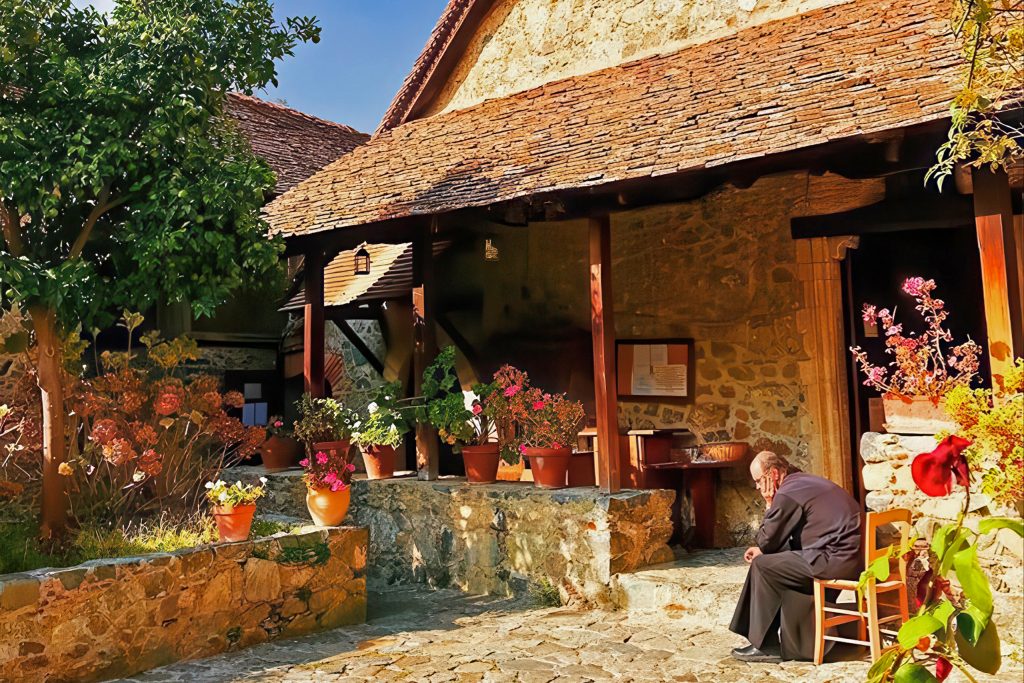
As a functioning monastery, Saint John Lampadistis served as a center of prayer, learning, and hospitality. Monks living there maintained liturgical traditions and preserved religious art during periods of political uncertainty. The monastery also supported surrounding communities by providing spiritual services and hosting religious festivals. Its role extended beyond monastic isolation, connecting mountain villages to wider ecclesiastical networks.
facebook-com
Preservation and World Heritage Recognition
Today, the Monastery of Saint John Lampadistis is protected as part of the UNESCO World Heritage listing of the Painted Churches of the Troodos Region. Conservation efforts focus on stabilizing the architecture and preserving the delicate frescoes from environmental damage. The protective roof and careful climate management continue to play crucial roles in safeguarding the complex.
facebook-com
The monastery’s recognition highlights its importance as a monument of architectural and artistic continuity. It stands as a rare example where multiple historical phases coexist within a single sacred space, offering scholars and visitors a comprehensive view of Cypriot medieval art and architecture.
Conclusion
The Monastery of Saint John Lampadistis represents an exceptional fusion of architectural development, artistic tradition, and spiritual devotion. Its three interconnected churches document centuries of religious life, reflecting Byzantine origins, Western influences, and local piety. The layered frescoes provide a visual history of evolving artistic styles, while the architectural structure itself tells a story of adaptation and continuity. As part of the Painted Churches World Heritage group, the monastery preserves not only sacred art but also the memory of a community that shaped and sustained it across generations.