 English
 Greek
Greek German
 Russian
On the northwest coast of Cyprus, the small town of Polis Chrysochous sits on top of two ancient cities. Most people who pass through treat it as a quiet stop on the way to the Akamas Peninsula.
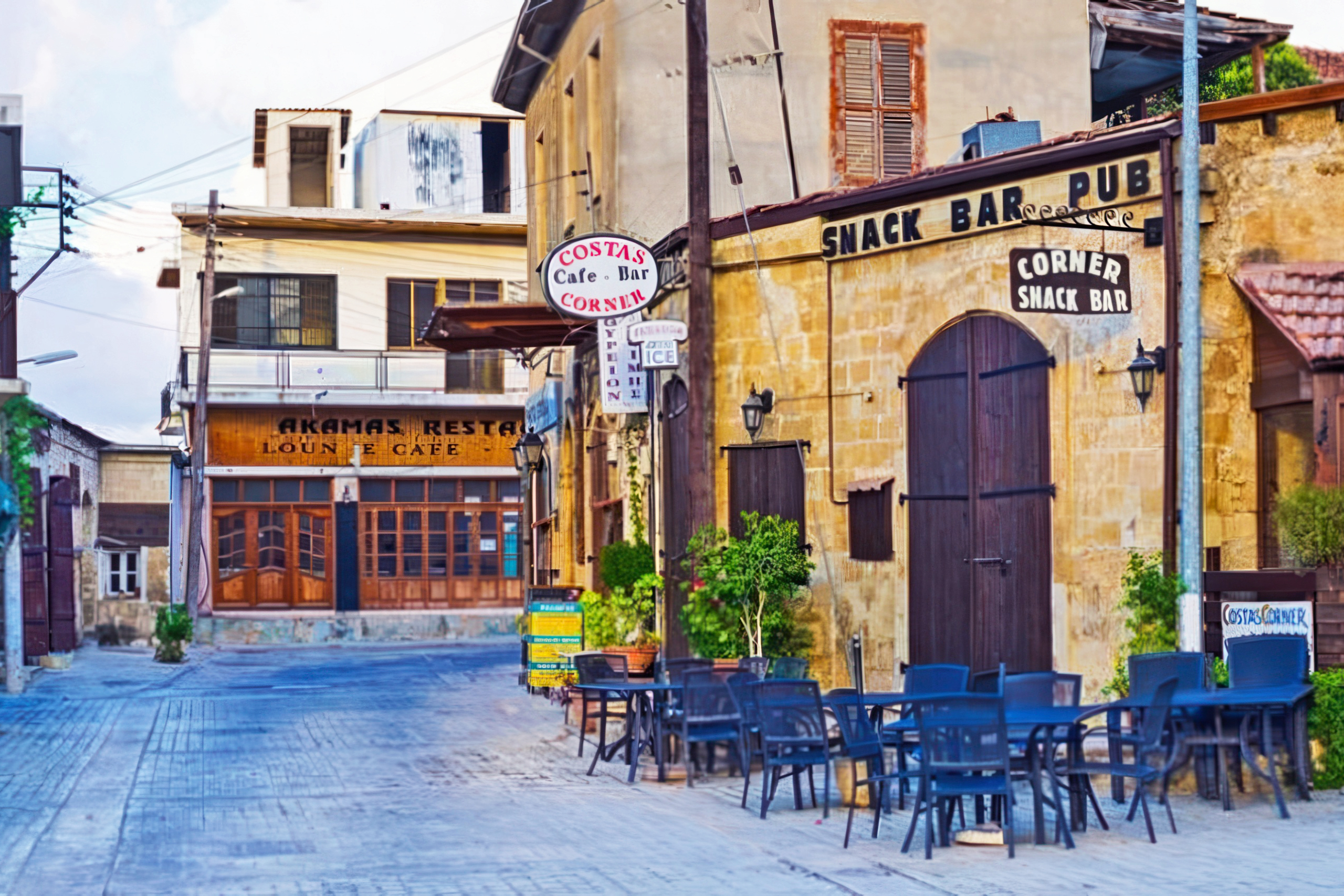
Few realise that beneath the modern streets, beneath the cafes and the central square, there are over 3,000 years of history. The town is built directly on the ruins of Marion, one of the ten city-kingdoms of ancient Cyprus, and its later successor, Arsinoe.
The name “Chrysochous” itself is a clue. It comes from the Greek word “chrysos,” meaning gold. This was not a random choice. It was a city that made its name from the ground beneath it.
Historical Background
The earliest traces of human activity in the area date back to the Neolithic period. The land was occupied long before anyone thought to build a city. According to ancient literary sources recorded by the Byzantine writer Stephanos Vyzantios, Marion was founded by a legendary king called Marieas. Tradition also connects the area to Akamas, the son of the Athenian hero Theseus, who is said to have passed through the region after the Trojan War and gave his name to the nearby cape and peninsula.
By the 8th century BC, Marion had grown into a formal city-kingdom. It sat on two low plateaus overlooking the Bay of Chrysochou, which gave it a clear view across the plain and out toward the sea. An inscription at the Egyptian temple of Medinet Habu, from the 12th century BC, mentions Cypriot towns, and Marion is believed to be among them. This places the area on the map of the ancient world very early on.
What Made Marion Wealthy
Marion’s wealth came from two sources: copper and gold. The nearby Limni mines produced both metals in significant quantities. Copper was the main export, shipped out through the city’s harbour, which is located about 4 kilometres away at present-day Latchi. The foundations of that ancient harbour are still visible today. Gold was also mined in the area, and this is the reason the river valley came to be called Chrysochou.
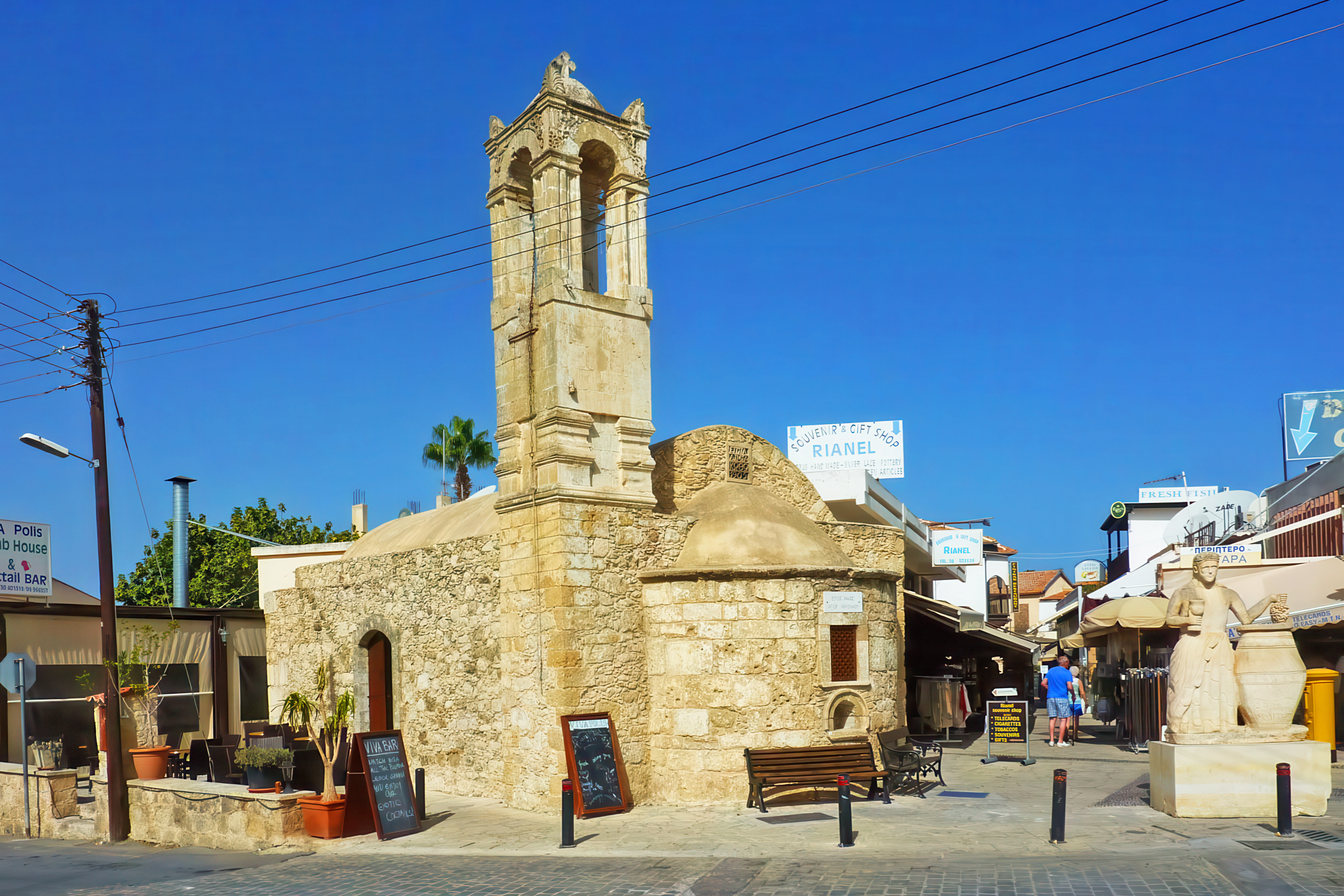
Beyond the mines, Marion also had fertile land and a strong position on trade routes. The city developed close commercial ties with Athens, which exported large amounts of painted pottery to Marion in return for metals. The necropolis surrounding the city has produced enormous quantities of imported Attic pottery, proof of just how active this trade was. Ancient geographers Strabo and Pliny the Elder both mention the city in their writings, and at one point Marion was referred to as “Marion Hellenikon,” the Hellenic Marion, due to its strong Greek cultural connections.
Facts That Stand Out
Several details about Marion are worth remembering. In 449 BC, the Athenian general Kimon freed Marion from the Persians. It was the first city he liberated on the island, and today a statue in his memory stands in front of the Polis cultural centre. After his liberation of Marion, Kimon moved on to besiege the Phoenician stronghold of Kition, where he died, either from illness or a wound during the siege.
The city’s last king, Stasioikos II, made a fatal political mistake after the death of Alexander the Great. He sided with Antigonos instead of Ptolemy I Soter in the power struggle that followed. Ptolemy responded by destroying Marion completely in 312 BC and relocating its inhabitants to Paphos. Around 270 BC, Ptolemy II Philadelphus rebuilt the city on the same site and renamed it Arsinoe, after his sister and wife. The new city was smaller than Marion, but it continued to prosper thanks to the nearby mines.
What the Tombs Revealed
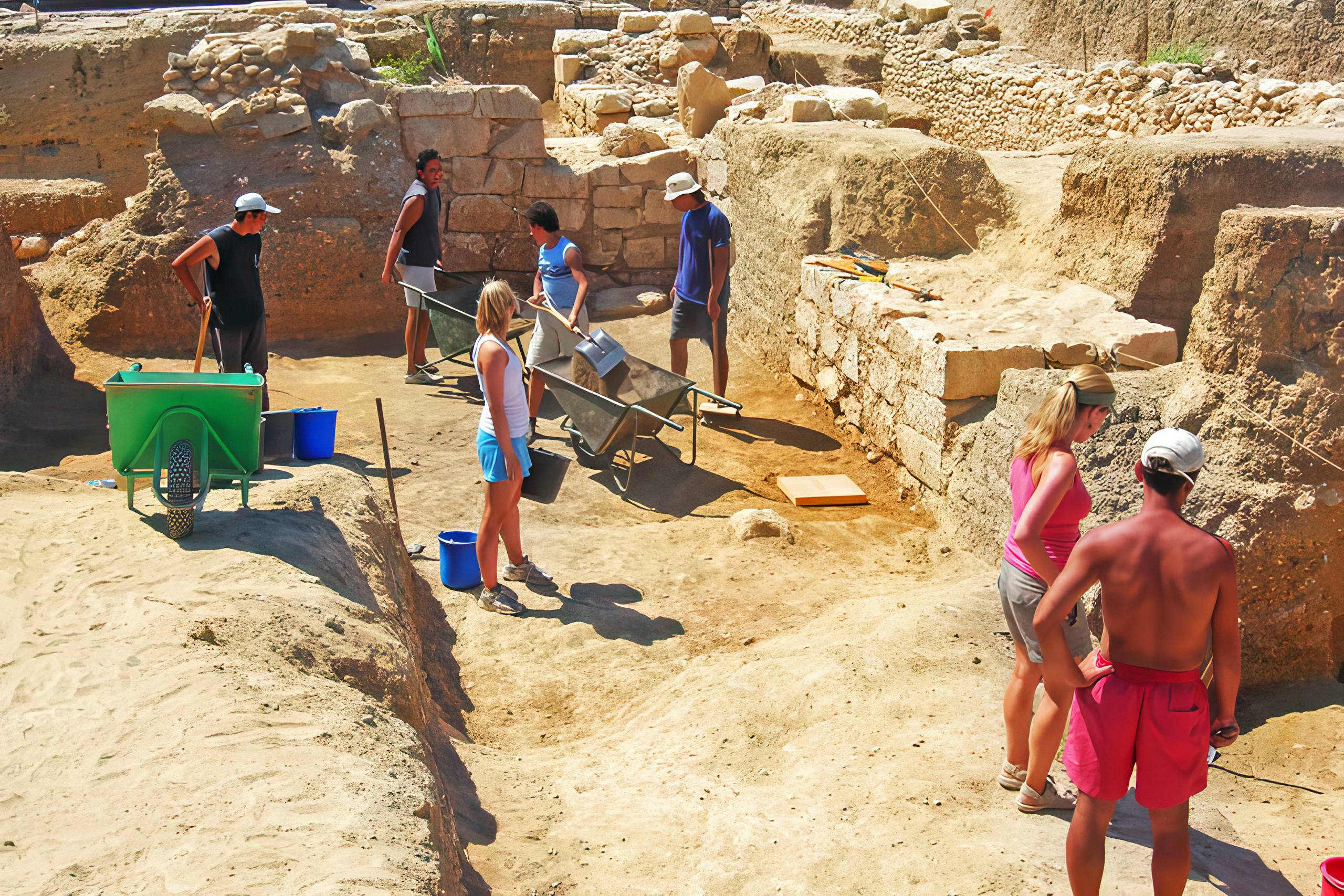
The most significant finds from Marion came not from the city itself, but from the vast necropolis that surrounded it. Excavations first began in 1885, when the German archaeologist Max Ohnefalsch-Richter received a permit to dig. In just two years, he excavated over 400 tombs. Since then, more than 850 tombs have been recorded in the fields around the modern town.
The tombs contained gold and silver jewellery of high quality, much of it made on Cyprus itself. One notable find was a pair of gold-plated spiral earrings with terminals shaped like female heads. Perhaps the most remarkable discovery was a marble kouros, a statue of a nude male youth carved from Parian marble. It is the only Greek marble kouros ever found on Cyprus, since the island has no native marble. It was imported from Greece and placed in a tomb as a funerary offering. This statue is now in the British Museum in London.
Religion and Sacred Ground
Marion was home to several sanctuaries. Strabo mentions a grove sacred to Zeus in the area, and an inscription from the time of the Roman emperor Tiberius confirms the presence of a sanctuary dedicated to both Zeus and Aphrodite. Coins minted by King Stasioikos II show Zeus on one side and Aphrodite on the other, a sign of how central both gods were to the city’s religious life.
The area around Polis also carries a deep mythological connection to Aphrodite. According to legend, she met her lover Adonis at a natural grotto nearby, now known as the Baths of Aphrodite. This site sits at the edge of the Akamas Peninsula, just a short drive from the town, and remains one of the most visited spots in the region.
Marion and Arsinoe in the Present Day
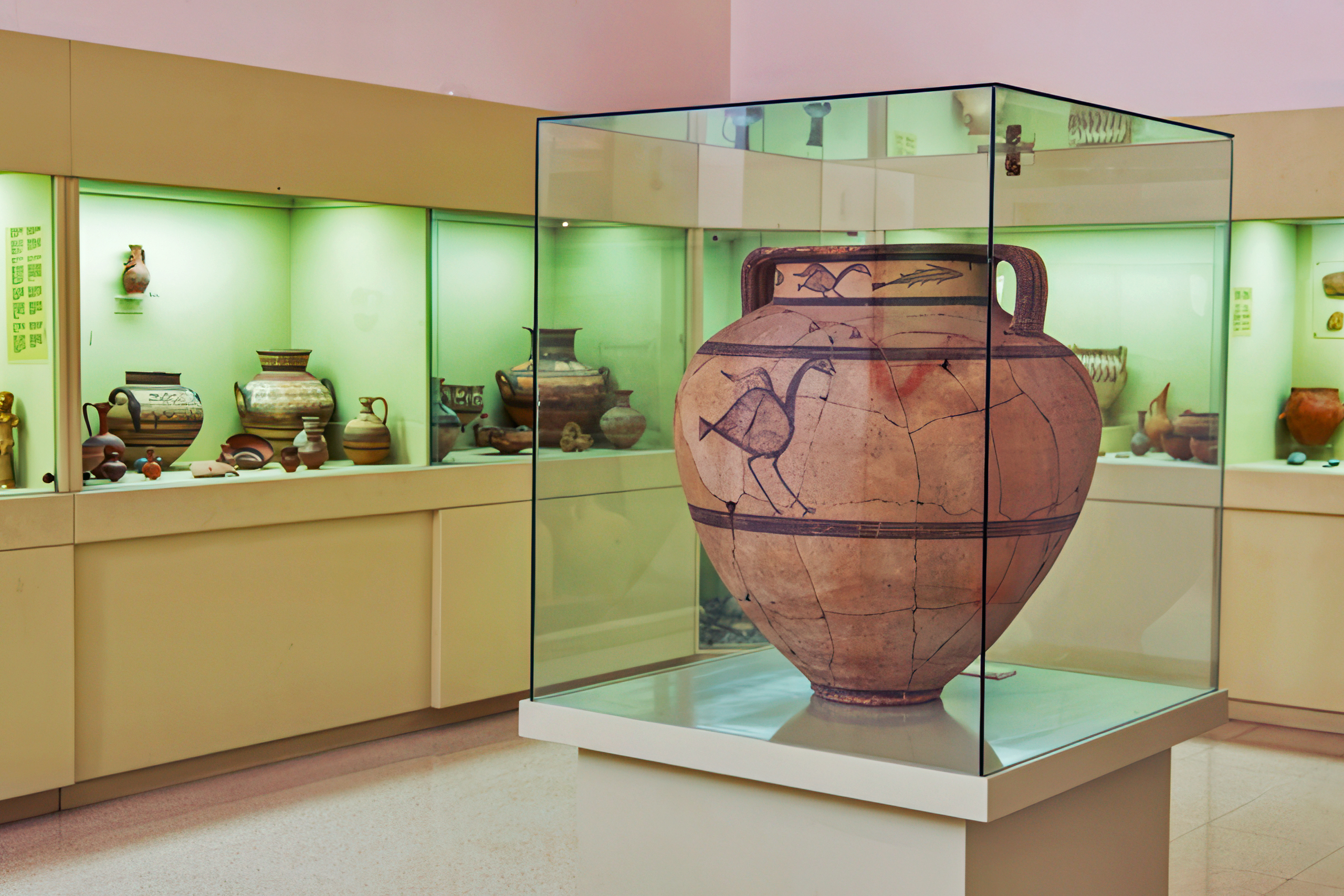
Arsinoe survived well into the medieval period and served as the seat of a Christian bishop for centuries. The city was eventually abandoned after the Arab raids of the 7th century AD, though archaeological evidence suggests some level of habitation continued even after that. Today, the Marion-Arsinoe Archaeological Museum sits in the heart of Polis. It opened in 1998 and holds a collection that traces the area’s history from the Neolithic period all the way to medieval times. The museum is part of the wider Aphrodite Cultural Route, which connects several historical and mythological sites across western Cyprus.
A Visit Worth Making
The archaeological museum is the main reason to stop in Polis, and it is very affordable at 2.50 euros to enter. The exhibits are arranged in chronological order, so visitors can follow the full story of the area from its earliest days.
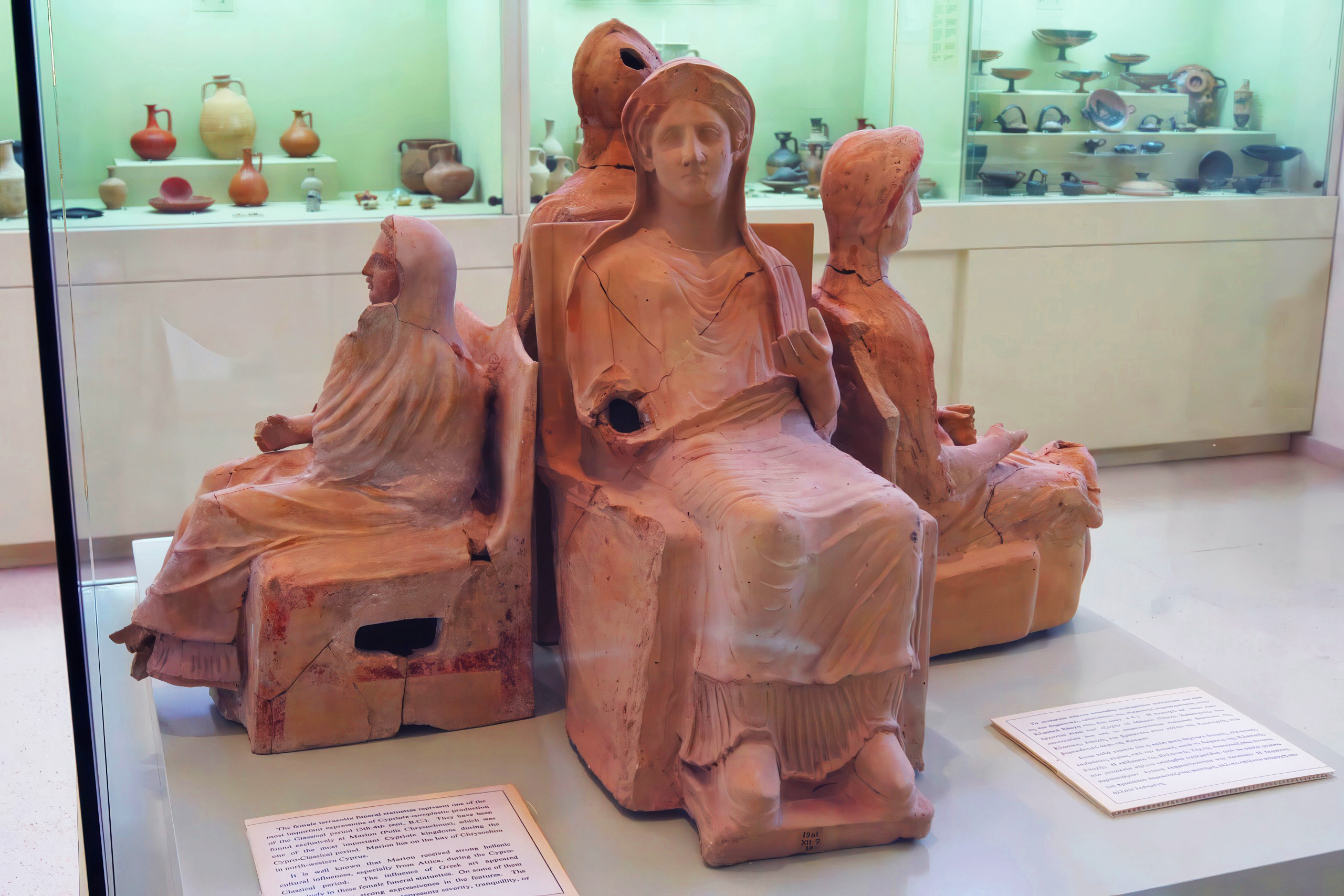
The museum is small, so a visit takes about 30 to 45 minutes. From Polis, the Baths of Aphrodite and the Akamas Peninsula are both within easy reach. The harbour at Latchi, where Marion’s ancient port once stood, is only a few minutes away. Spring and autumn offer the best weather for visiting, though the town is comfortable to explore in any season.
Why This Place Still Matters
Marion was one of the wealthiest city-kingdoms on an island that shaped the ancient world’s access to copper. Its tombs produced some of the finest gold jewellery and the only Greek marble kouros ever found in Cyprus. The city changed hands multiple times, was destroyed, rebuilt, and renamed, yet the wealth it generated from the ground beneath it kept it relevant for over a thousand years. Today, Polis Chrysochous carries that history quietly, in its name, in its museum, and in the ground that still holds secrets yet to be uncovered.