 English
 Greek
Greek German
 Russian
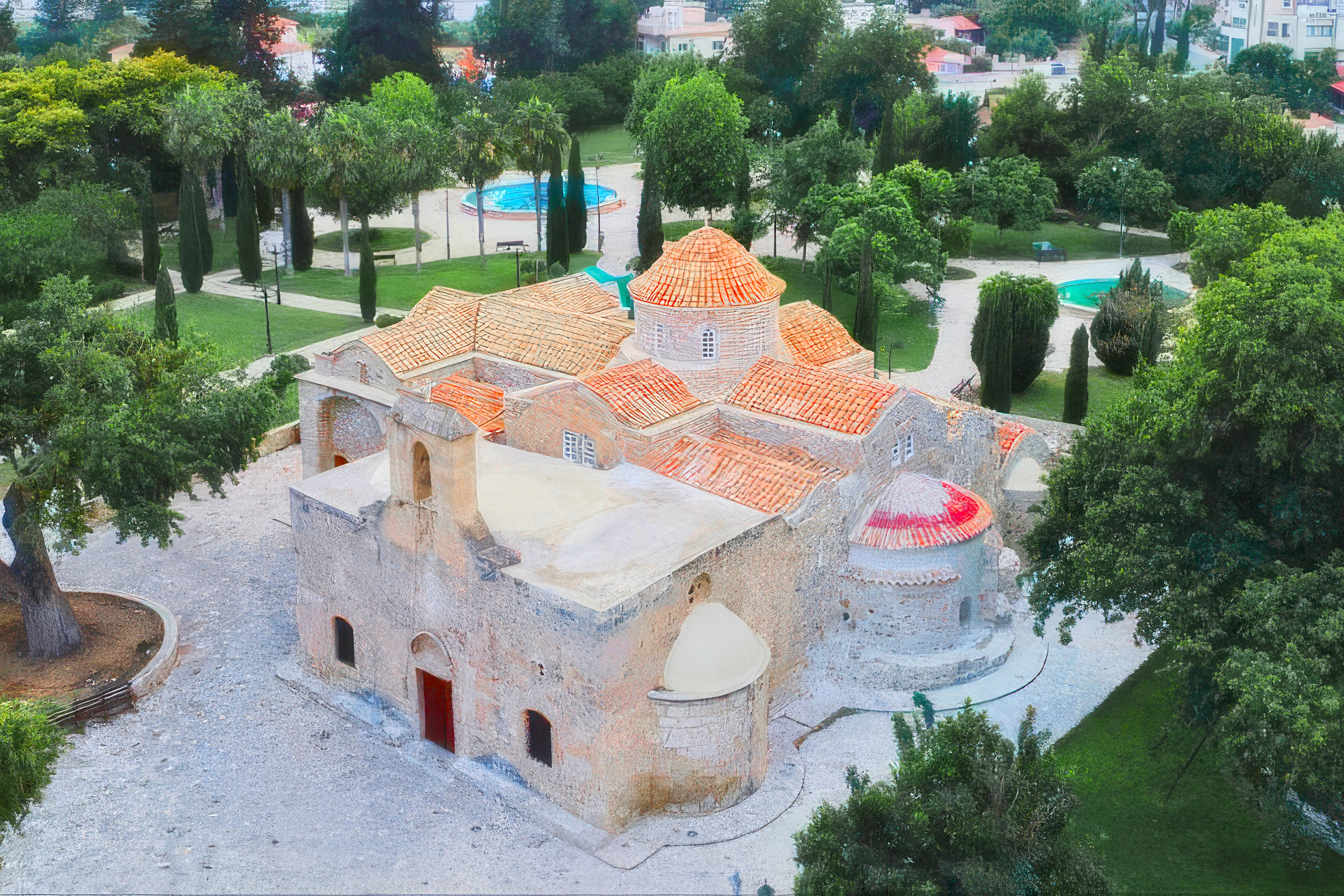
Panagia Angeloktisti Church stands in the village of Kiti, roughly 12 kilometers southwest of Larnaca. The church dates to the 11th century and was built over the ruins of a 5th century early Christian basilica.
The name Angeloktisti translates to “Built by Angels” in Greek. The original apse of the basilica survived along with one of the finest pieces of Byzantine art on the island, a rare 6th century mosaic of the Virgin Mary and Child between the Archangels Michael and Gabriel.
This stone church preserves multiple layers of Cyprus’s religious history, from early Christian times through Byzantine and Frankish periods. The building serves as an active place of worship while housing artistic treasures that connect directly to the Byzantine Empire’s golden age.
Historical Background
The residents of ancient Kition moved to Kiti to escape Arab invasions that plagued the coastal areas during the 7th and 8th centuries. Kition was an ancient Phoenician and Greek city-kingdom that served as a major port, exporting agricultural products across the eastern Mediterranean.
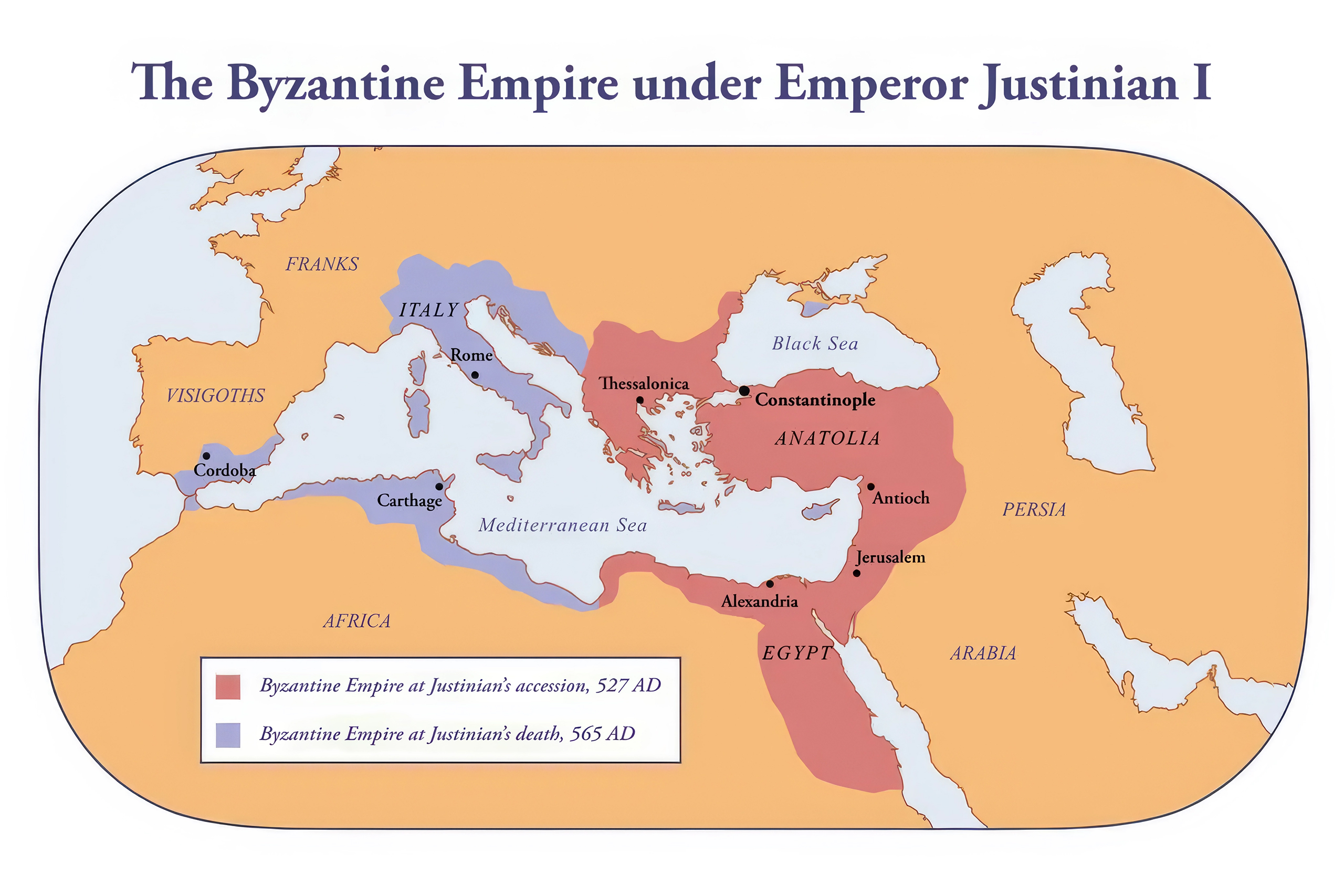
As Arab raids intensified and the Byzantine Empire struggled to maintain control over Cyprus’s periphery, inhabitants sought safer inland locations. Many Cypriot basilicas were destroyed around the 7th and 8th centuries, either from Arab raids or fires, since churches were wooden structures lit by oil lamps.
The apse and mosaic at Kiti miraculously survived this widespread destruction. The current church was constructed in the 11th century, incorporating the remains of the earlier basilica. In the 12th century a barrel-vaulted chapel was built to the north, dedicated to the healer saints Kosmas and Damianos, possibly serving a funerary function since medieval tombs were found outside the northern side. The Franks later added another chapel to the south in the late 13th or early 14th century.
The legendary construction and architectural features
Local legend explains the church’s unusual name. During construction, villagers discovered that the church foundations had moved to a different location overnight, and many claimed to have seen an army of angels building the church, hence the name Angeloktisti. The current structure follows a domed cross-in-square plan, typical of Byzantine architecture. A 1959 excavation of the basement discovered graves built into the earlier foundations, indicating that the early Christian basilica had served as a burial ground.
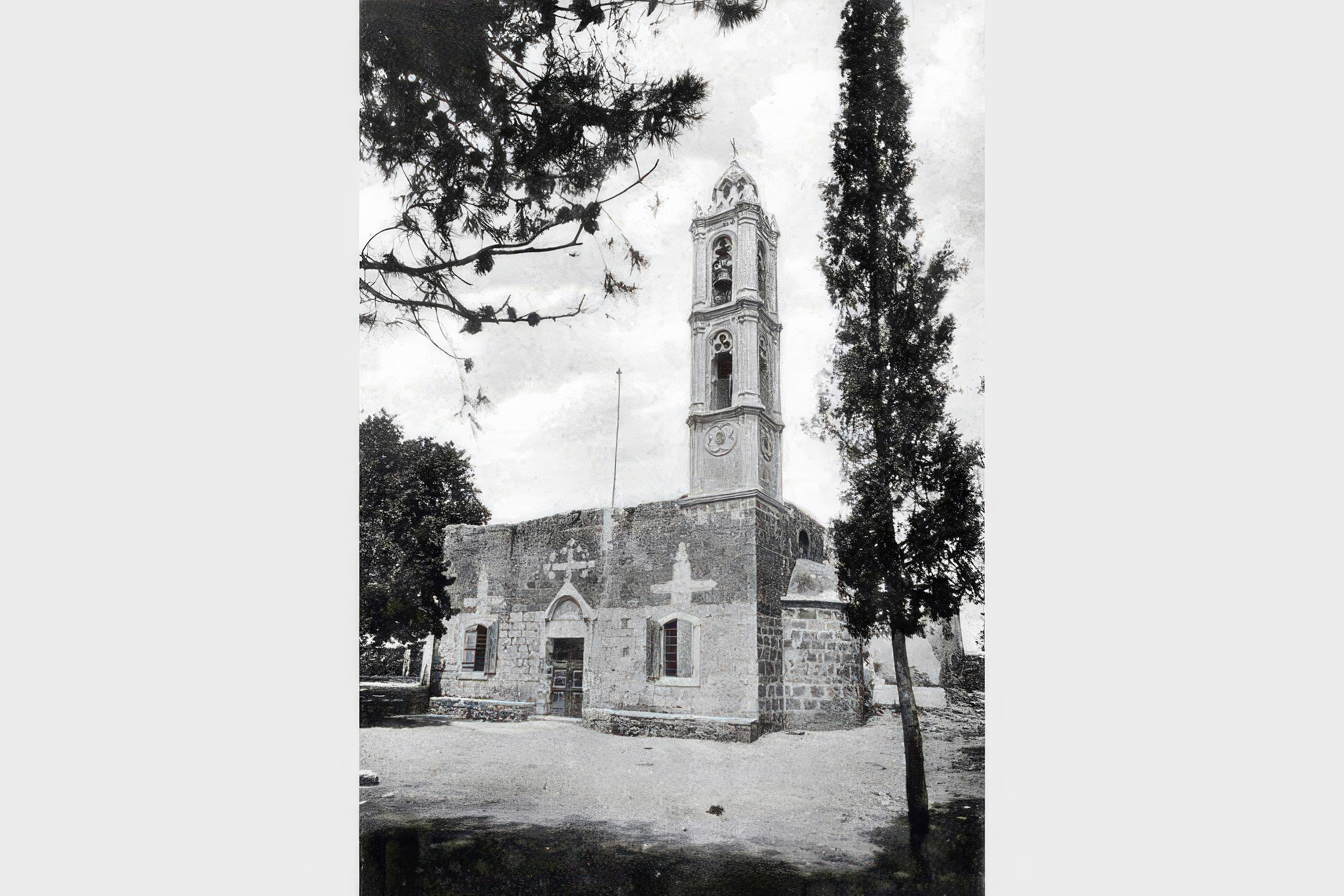
This excavation also revealed that two construction phases preceded the current church, a columned basilica followed by a pier basilica in the 6th or 7th century. The semi-circular synthronon, the seat reserved for clergy placed in the apse, survives from the 5th century basilica and can still be seen behind the altar. The church was constructed from rubble masonry, a common building technique in Byzantine Cyprus.
The magnificent 6th century mosaic
The 6th century wall mosaic on the half-dome over the sanctuary apse is considered one of the most significant wall mosaics of early Christian art. The mosaic depicts the Virgin standing on a gold background, holding baby Jesus in her left arm, with the Archangels Michael and Gabriel on either side, and represents the oldest surviving monumental representation of this type of Virgin, the Panagia Vrefokratousa. The inscription refers to her as “H AGIA MARIA” (Holy Mary), which is intriguing since this designation was typically used only in Monophysite districts of Anatolia.
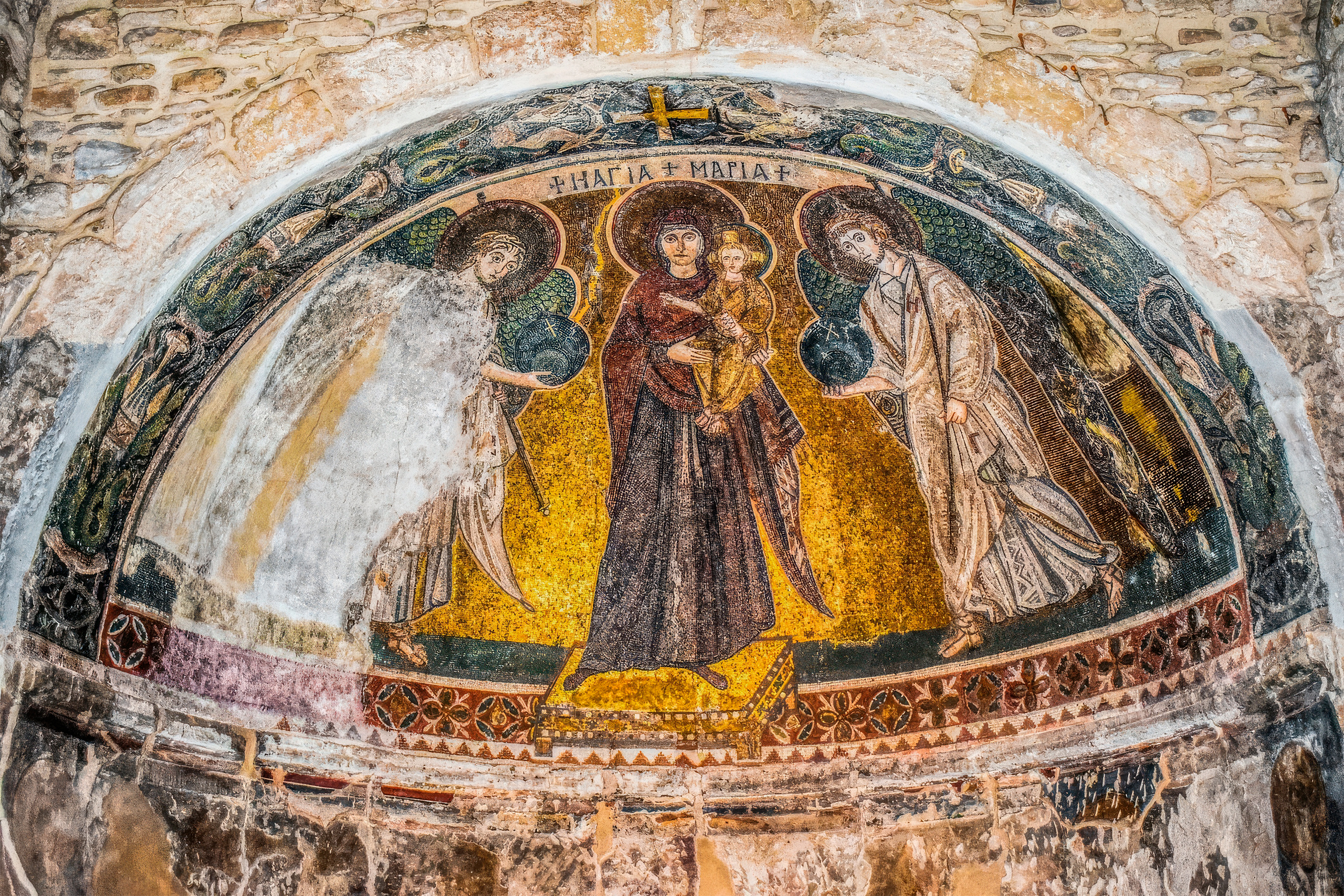
The Virgin holds Christ in the Hodegetria style and stands on a stool in a manner that makes her appear almost as if she were standing in mid-air. Both angels’ wings appear to be made from peacock feathers, which symbolize eternal life, and the angels hold a scepter and offer a globe with a cross at the apex, symbolizing the offering of earthly domination to Christ and the Virgin.
The mosaic is completed with a border depicting the Fountain of Life with pairs of ducks, beribboned parrots (a Persian symbol of terrestrial power), and deer or stags drinking from the fountains. The period of Emperor Justin II saw expanded production of wall and floor mosaics throughout the Byzantine Empire, and Cyprus participated fully in this artistic flourishing.
Artistic treasures beyond the mosaic
The church is decorated with wall paintings from the 11th century, a wooden iconostasis from the 16th century, and icons dating from the 13th to the 19th century. The sanctuary houses a very old and unique icon from the 10th century that depicts the Virgin Mary, Saint Lazarus, and the Evangelist Loukas.
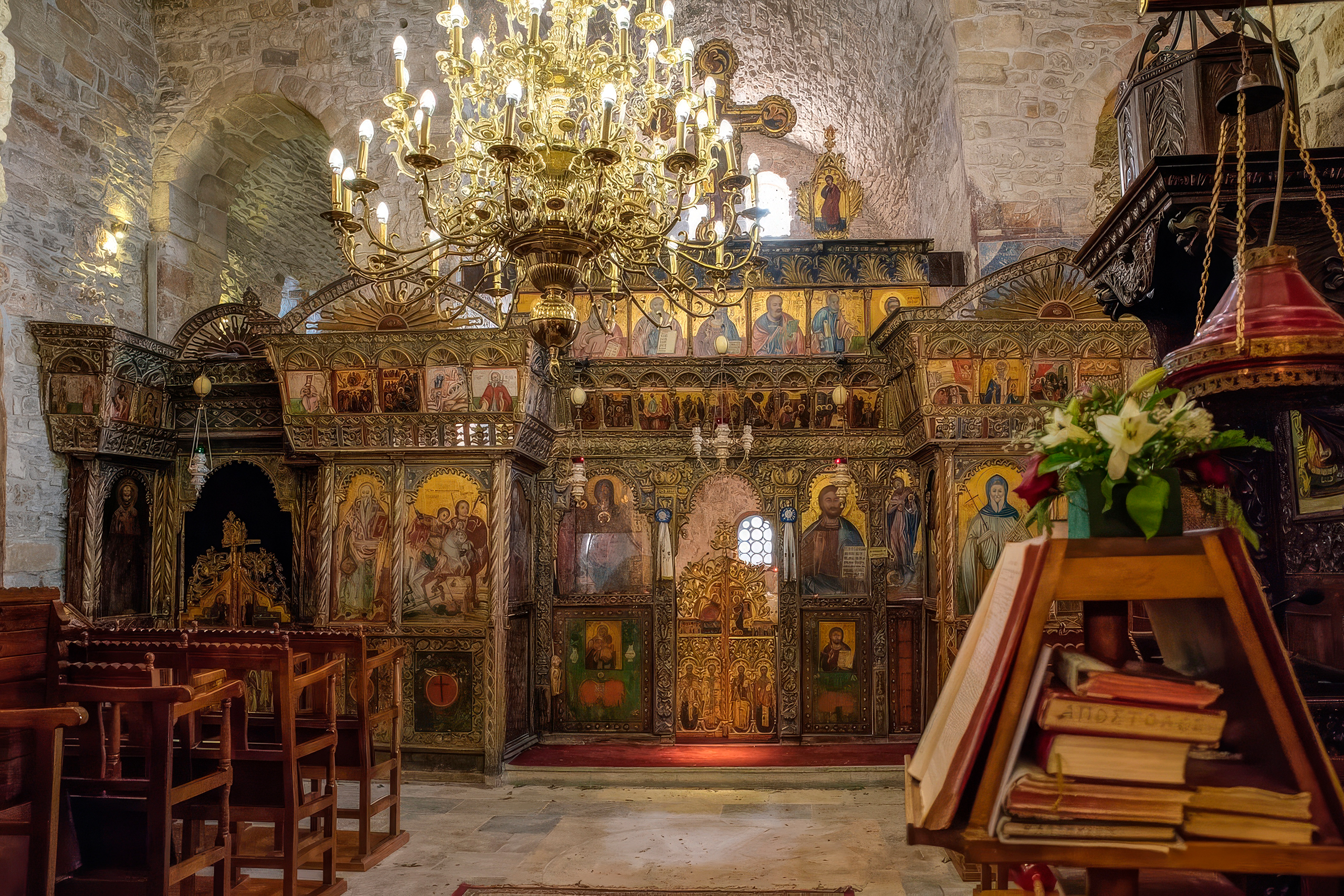
The 13th century frescoes were uncovered in both the main church and the north chapel. Fragments of paintings from the 14th and 15th to 16th centuries also survive, with some overpainting attributed to the 18th century. These artistic elements suggest the continuous artistic and religious connections of Cyprus with the Byzantine world and the assimilation of artistic elements from different cultures, including Byzantine and Frankish influences.
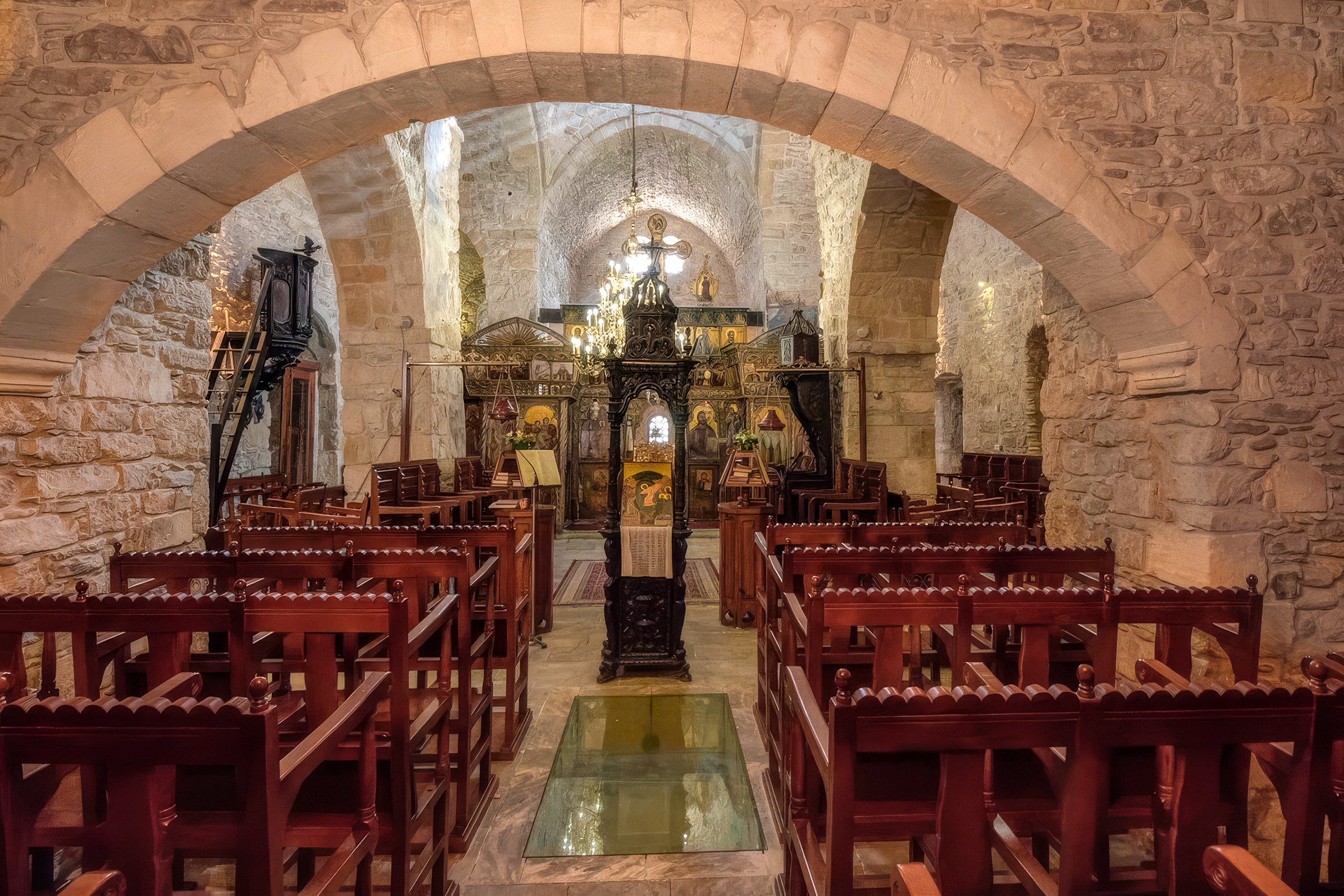
The church demonstrates ecclesiastical architectural development over a wide temporal spectrum, from the 5th to the 14th centuries, combining elements of Byzantine and Gothic architecture.
Rare survival of iconoclasm
Only in Cyprus and Mount Sinai did mosaics from this period survive the iconoclastic decrees ordering the destruction of most icons. The mosaic rivals the famous mosaics of Ravenna, Italy. Between 726 and 842, the Byzantine Empire experienced the Iconoclastic Controversies, when Emperor Leo III banned the creation of religious images and authorities encouraged widespread destruction of religious art. The survival of the Kiti mosaic represents an exceptional circumstance.
The mosaic provides crucial evidence for artistic and religious relationships at an important period of European cultural history. Comparable wall mosaics from the same period exist at Saint Catherine’s Monastery in the Sinai Desert, which was also founded by Emperor Justinian. The precision and delicacy used to construct the faces at Kiti stands in marked contrast to other contemporary works. Conservation works undertaken from 1952 to the present day have secured the intactness of the mosaic’s form, design, materials, and artistry.
A living church in modern Cyprus
The church is still in use for its original purposes within the small-scale rural community of Kiti village. The green area developed around the church has secured its natural landscape, while the management plan focuses on conservation and preservation measures. Every 15th of August, the church celebrates the Feast of the Assumption with traditional festivities. Visitors report that the church exudes calm and serenity, enhanced by the surrounding park with its garden.
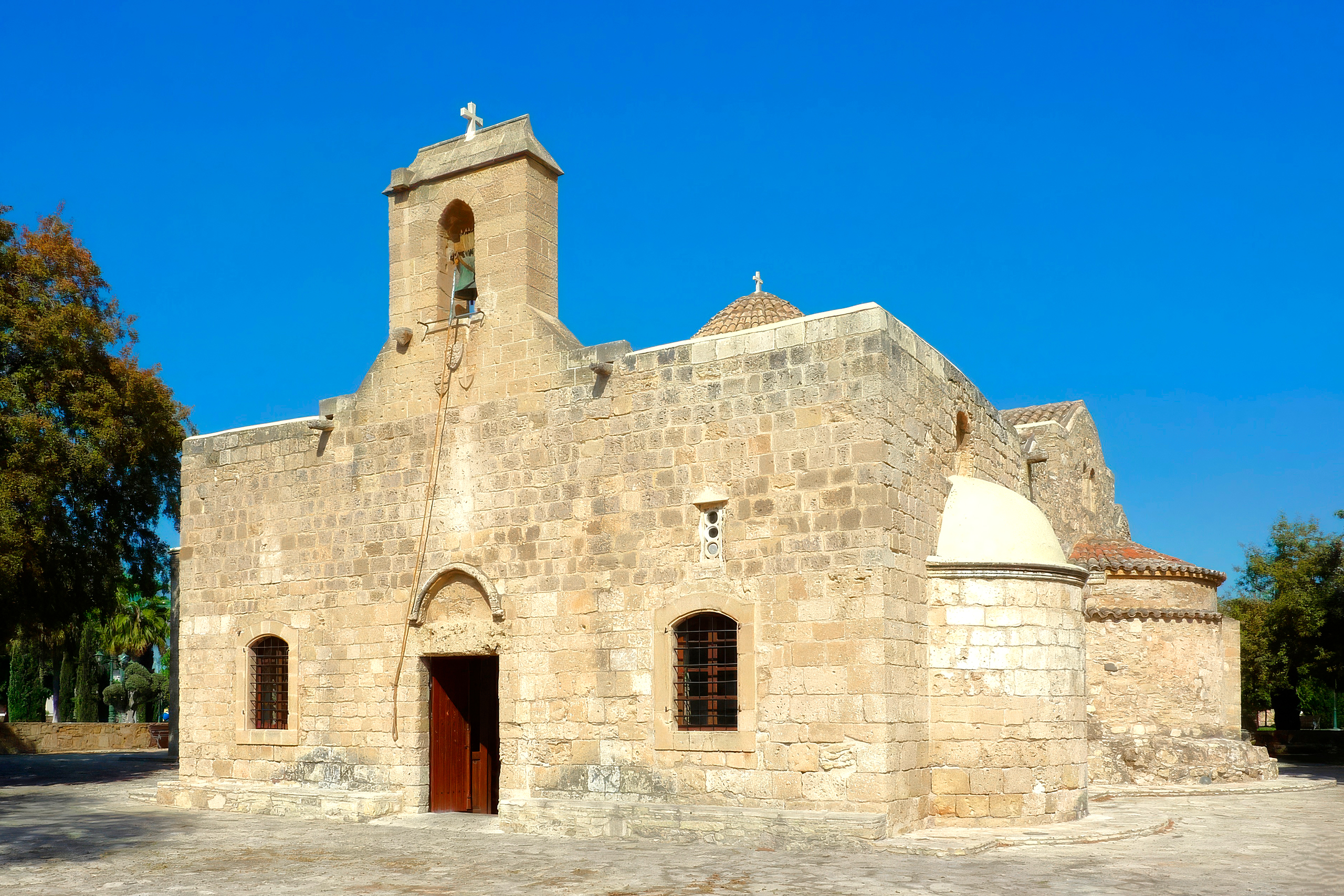
The church was declared a protected monument under the Antiquities Law of the Republic of Cyprus in 1935. The Church of Panagia Angeloktisti was submitted as a possible UNESCO World Heritage Site in September 2015 and is currently listed on the Tentative list. The church maintains a high level of authenticity in its present state, with all consolidation and conservation works well documented. The relationship between the monument and the local community remains strong, as Kiti residents continue their spiritual connection to this sacred space.
Visiting to Kiti
The church is located at the northwest end of Kiti village, easily accessible from Larnaca. The site remains open to visitors throughout the year. Entrance is free, though donations are appreciated. The interior showcases the famous mosaic in the sanctuary apse, visible from the main church area. Photography is generally permitted but flash photography should be avoided to protect the delicate artworks. A small park surrounds the church, offering benches and shade trees where visitors can rest. A cafe with tables operates near the church. The village of Kiti itself preserves traditional Cypriot character, with coffee shops and taverns around the village square.
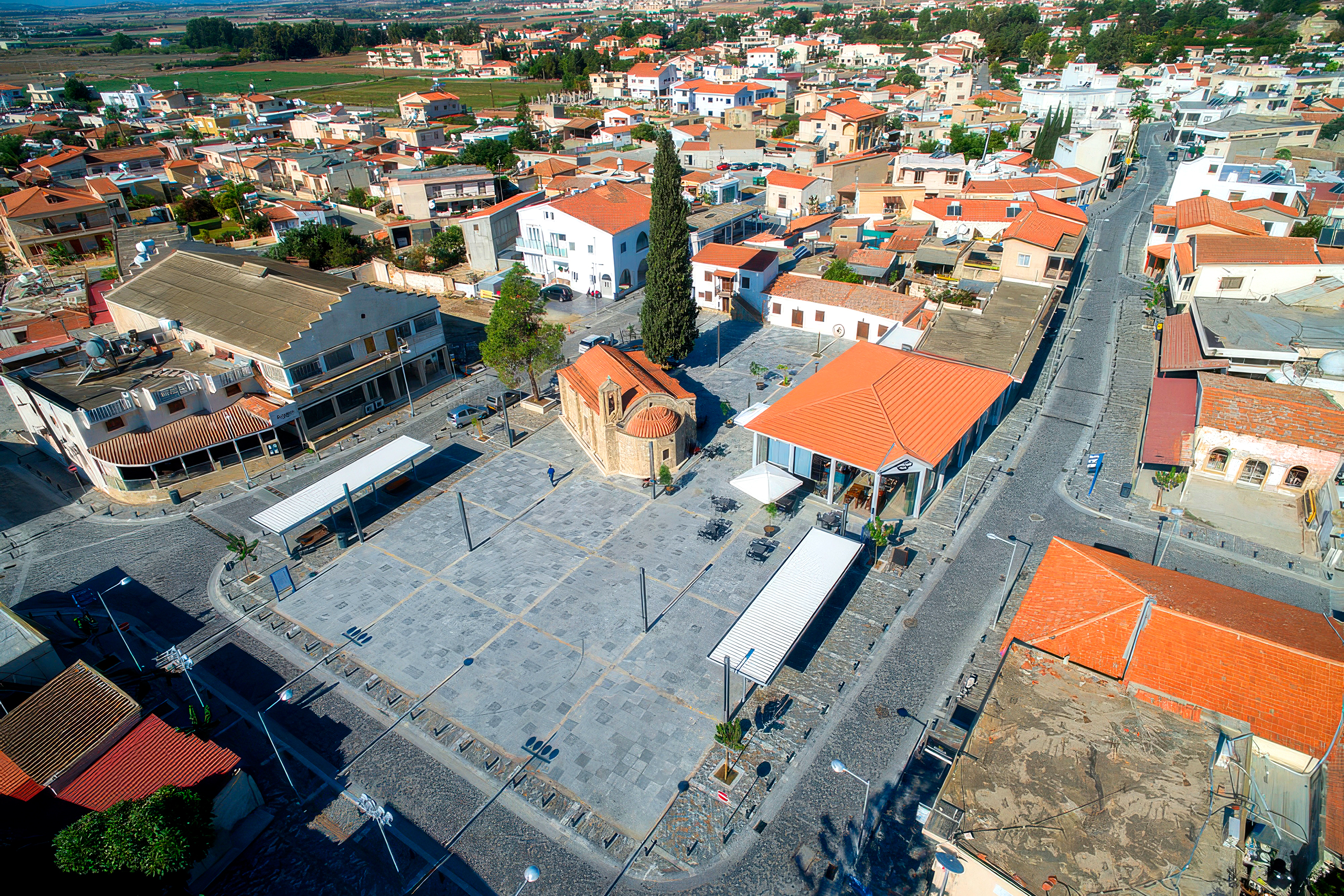
Visitors often combine a trip to Angeloktisti with exploration of the nearby Kition Archaeological Site, where remains of the ancient city-kingdom can be seen. The best time to visit is during morning hours when natural light illuminates the interior, or during the August 15th feast when the church comes alive with music, traditional dancers, stalls, and local celebrations.
Why Angeloktisti matters
Panagia Angeloktisti Church represents a direct link to the Byzantine Empire’s artistic and spiritual heritage. The survival of the 6th century mosaic through centuries of political turmoil, natural disasters, and iconoclastic destruction makes this church one of Cyprus’s most significant monuments. The building demonstrates how religious communities adapted and persevered through dramatic historical transitions, from Byzantine to Frankish rule, while maintaining continuity of worship and artistic tradition.
The church stands as proof that even in peripheral island contexts, the influence of major centers of Christian art and culture reached deeply and left lasting marks. For modern Cyprus, Angeloktisti serves as a tangible reminder of the island’s central position in Mediterranean religious and cultural networks, a status that defined Cypriot identity for over a millennium.
Meta Description: Discover Panagia Angeloktisti Church in Kiti, Cyprus, home to a rare 6th-century Byzantine mosaic of the Virgin Mary and angels that survived iconoclasm.