 English
 Greek
Greek German
 Russian
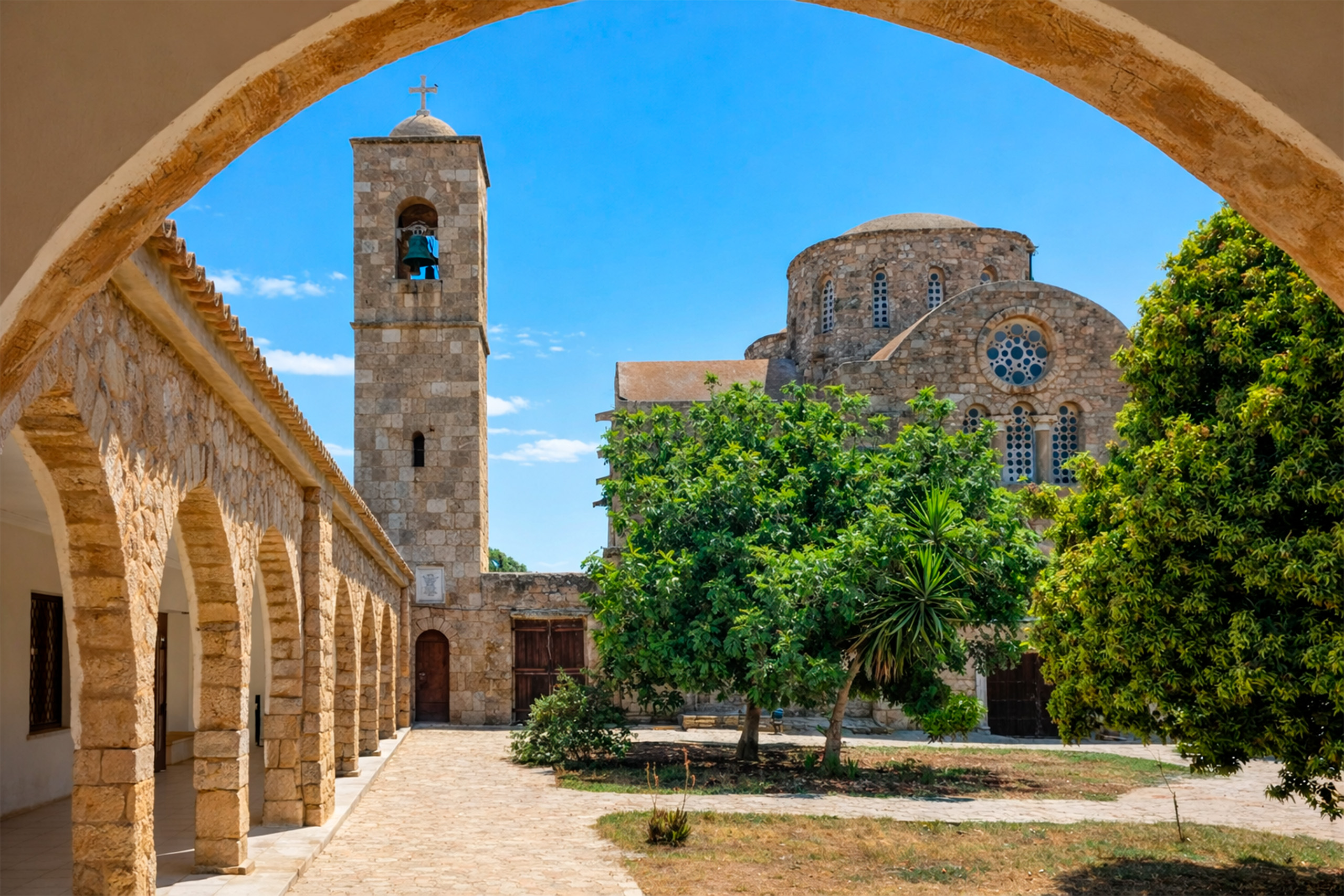
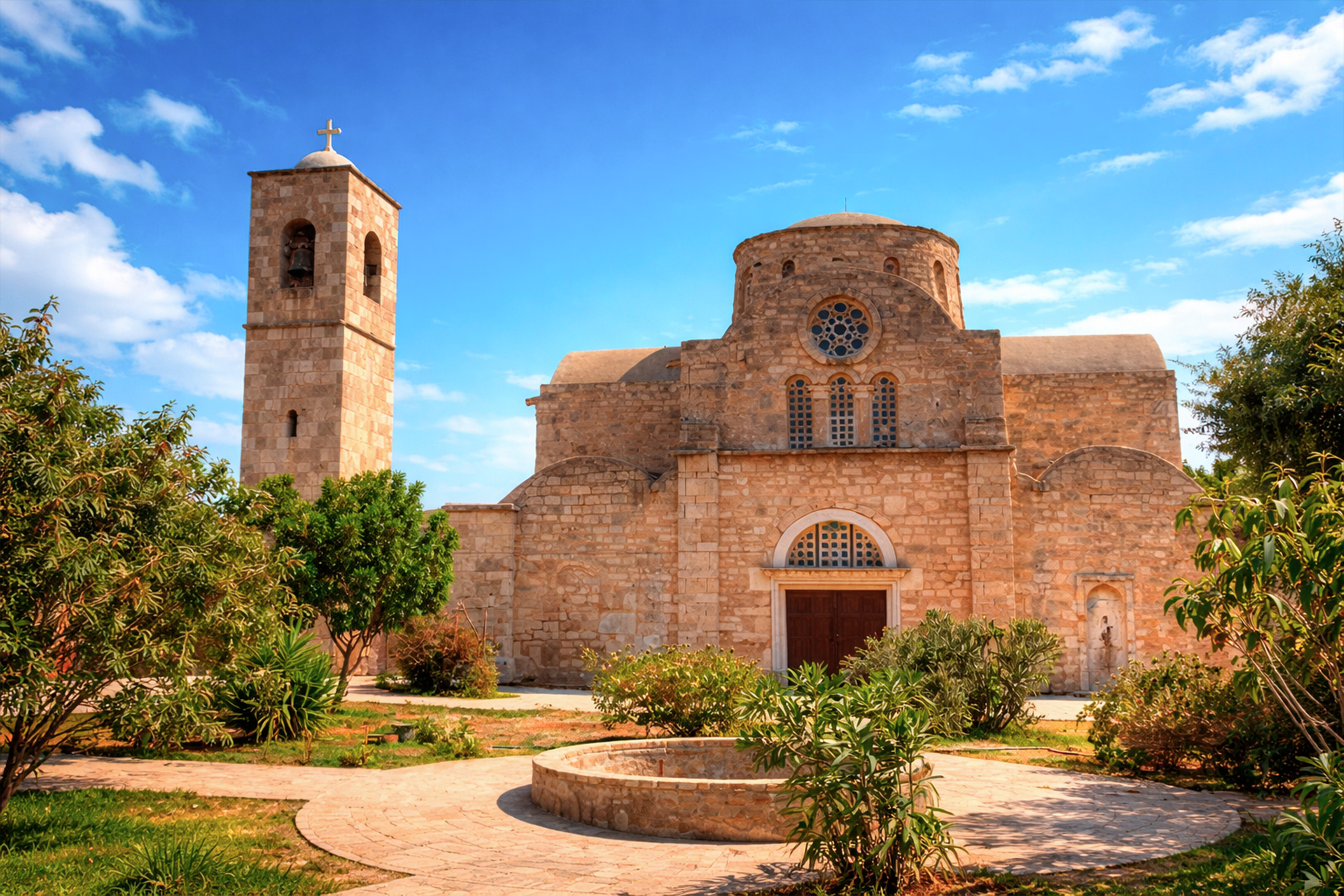
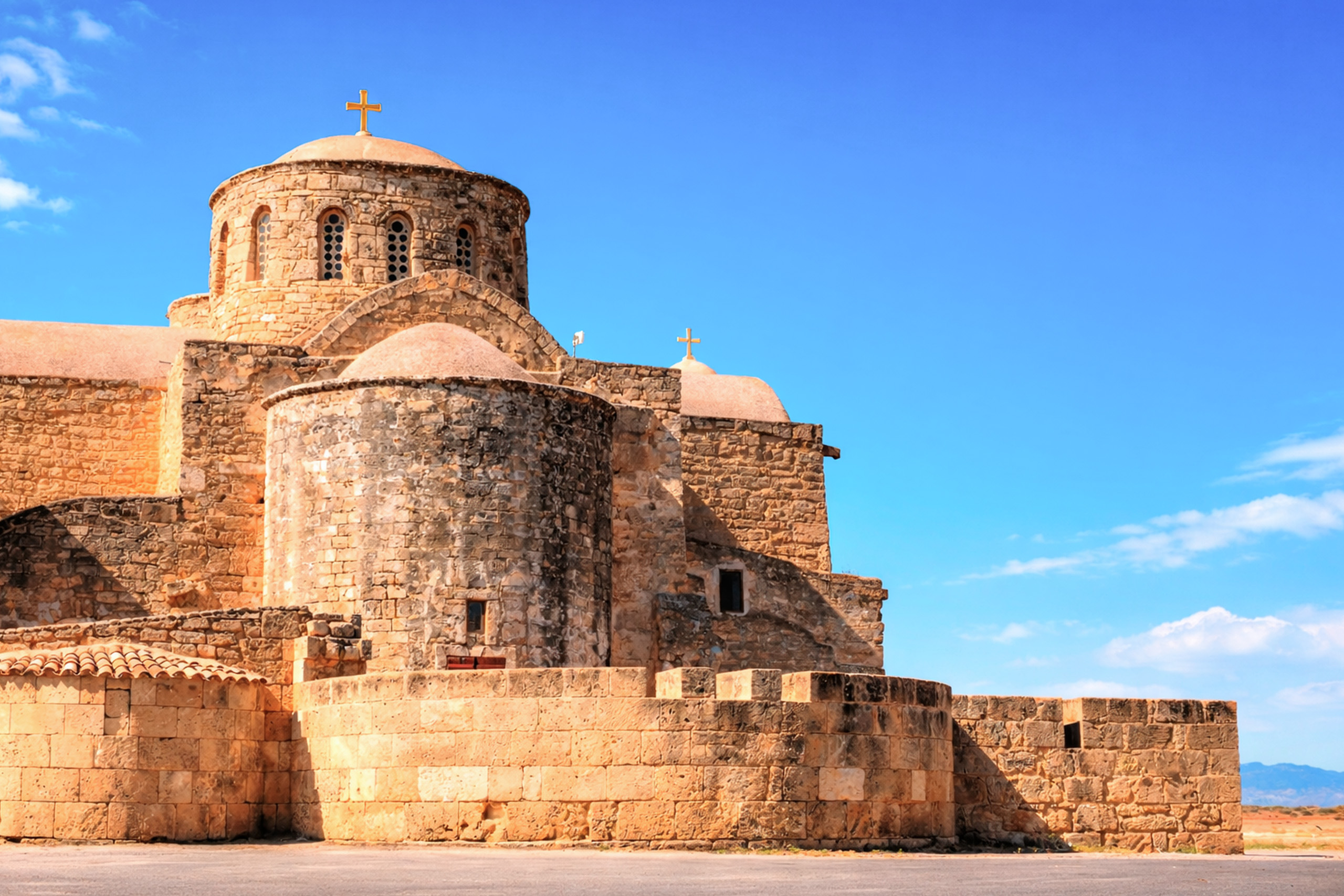
Near the ruins of ancient Salamis, a monastery complex marks the spot where one of Christianity’s first apostles was buried in secret after being martyred for his faith. Saint Barnabas was a native of Cyprus who joined Paul on missionary journeys that brought Christianity to the island and converted its Roman governor. His discovery in a tomb 400 years after his death would change the course of Cypriot church history and establish the Orthodox Church of Cyprus as an independent institution.
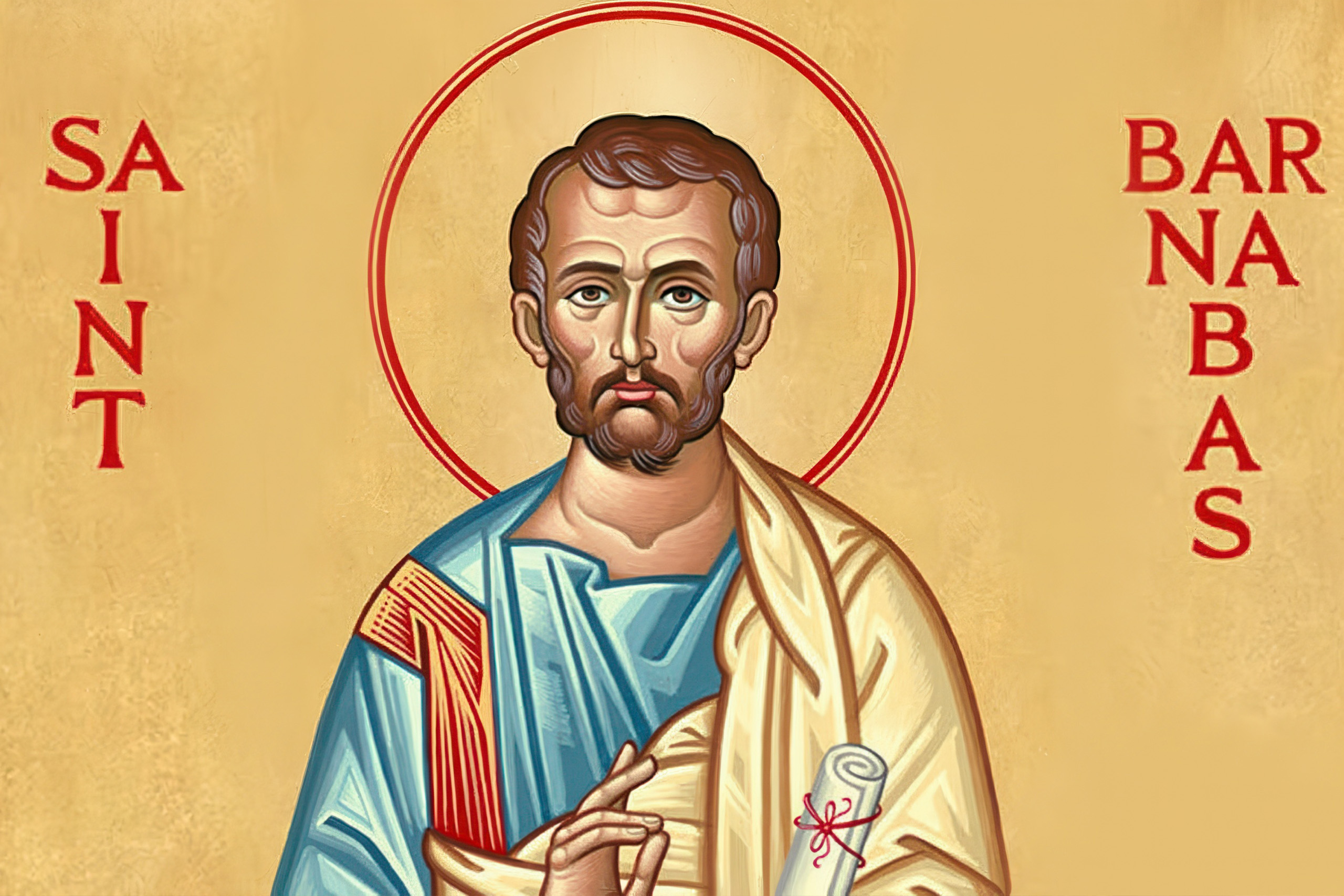
Barnabas holds a unique position in Christian history as the apostle who validated Paul’s conversion and introduced him to the Christian community in Jerusalem. According to the Acts of the Apostles, Barnabas sold his property near Jerusalem and donated the proceeds to the early church, demonstrating his complete dedication to the new faith. He is considered the patron saint of Cyprus and is commemorated on June 11th in the Orthodox calendar.
Historical Background
Barnabas traveled to Jerusalem to study law under Rabbi Gamaliel, the same teacher who instructed Paul. While studying in Jerusalem, Barnabas witnessed miracles performed by Jesus and became one of His followers. When Paul (then called Saul) returned to Jerusalem after his dramatic conversion on the road to Damascus, the Christian community was understandably suspicious of the former persecutor of Christians. Barnabas played a crucial role by vouching for Paul’s sincerity and introducing him to the apostles. This act of faith allowed Paul to begin his ministry and eventually become Christianity’s most influential missionary.
The church in Jerusalem sent Barnabas to Antioch to oversee the growing Christian movement there. Recognizing the extent of the work, he traveled to Tarsus to find Paul and brought him back to assist. The two worked together in Antioch for a full year before being sent on their first missionary journey.
The First Missionary Journey to Cyprus
Around 45 AD, the prophets and teachers at Antioch, inspired by the Holy Spirit, laid hands on Barnabas and Paul and sent them forth to spread the Gospel. They were accompanied by John Mark, Barnabas’s cousin. The missionaries sailed from Seleucia to Cyprus, landing at Salamis, Barnabas’s birthplace.
In Salamis, they preached in the Jewish synagogues before traveling across the island to Paphos, the Roman capital. There, they encountered a Jewish sorcerer and false prophet named Bar-Jesus (also called Elymas), who was an associate of the Roman proconsul Sergius Paulus. When the proconsul expressed interest in hearing the Word of God and invited the apostles to speak with him, the sorcerer attempted to prevent the conversion.
Paul confronted the sorcerer and struck him temporarily blind through divine power. This incident, as per history, convinced Sergius Paulus to accept Christianity, making Cyprus the first territory in the Roman world to have a Christian ruler.
The Disagreement and Return to Cyprus
After their successful missionary journey, Paul and Barnabas attended the Council of Jerusalem around 50 AD to address whether Gentile converts needed to follow Jewish law. They testified about the conversions they had witnessed among Gentiles and helped establish that faith in Christ was sufficient for salvation without requiring circumcision or adherence to Mosaic law.
When Paul proposed a second missionary journey, a sharp disagreement arose. Barnabas wanted to take John Mark again, but Paul refused because Mark had abandoned them partway through the first journey. The dispute resulted in the two apostles parting ways. Barnabas took Mark and returned to Cyprus, while Paul chose Silas and traveled to Syria and Asia Minor.
Despite this disagreement, Paul later wrote positively about Barnabas in his letters and noted that John Mark had become useful to him, suggesting the rift was eventually healed. The separation allowed two missionary teams to operate simultaneously and expanded the reach of early Christian preaching.
Martyrdom in Salamis
According to Christian tradition, Barnabas was martyred in Salamis around 61-75 AD, though the exact date remains uncertain. After returning to Cyprus, he continued preaching in the synagogues and converting both Jews and Gentiles. His success in winning converts increasingly angered the Jewish community, which rejected Christianity.
The traditional account states that Barnabas was arrested while disputing in a Salamis synagogue. An enraged mob of Syrians dragged him outside the city, subjected him to torture, stoned him to death, and then built a fire to burn his body. John Mark, who witnessed these events, retrieved the body after the mob dispersed. Together with converted slaves from a local temple, he secretly buried Barnabas in a cave beneath a carob tree west of the Salamis necropolis.
Following Barnabas’s final wishes, John Mark placed a copy of the Gospel of Matthew, which Barnabas had copied in his own hand, on his cousin’s chest. Pursued by Jews who discovered their plan, John Mark and the others escaped to Nicosia and then fled to Egypt. The tomb’s location was subsequently forgotten as Christianity faced continued suppression in Cyprus.
The Discovery of the Tomb
For over 400 years, the burial site remained unknown. In the late 5th century, the Church of Antioch claimed authority over the Cypriot church on the grounds that Christianity had spread from Antioch to Cyprus. Antioch’s founding bishop had been the Apostle Peter, giving that church apostolic credentials. The Cypriot church believed it had equal apostolic standing through Barnabas, but lacked proof.
In 477-478 AD, during the reign of Emperor Zeno, Archbishop Anthemios of Cyprus (also called Constantia at this time) experienced a series of dreams over three consecutive nights. In these visions, Saint Barnabas appeared and revealed the location of his long-forgotten tomb beneath a carob tree near Salamis. The archbishop ordered excavation at the indicated spot.
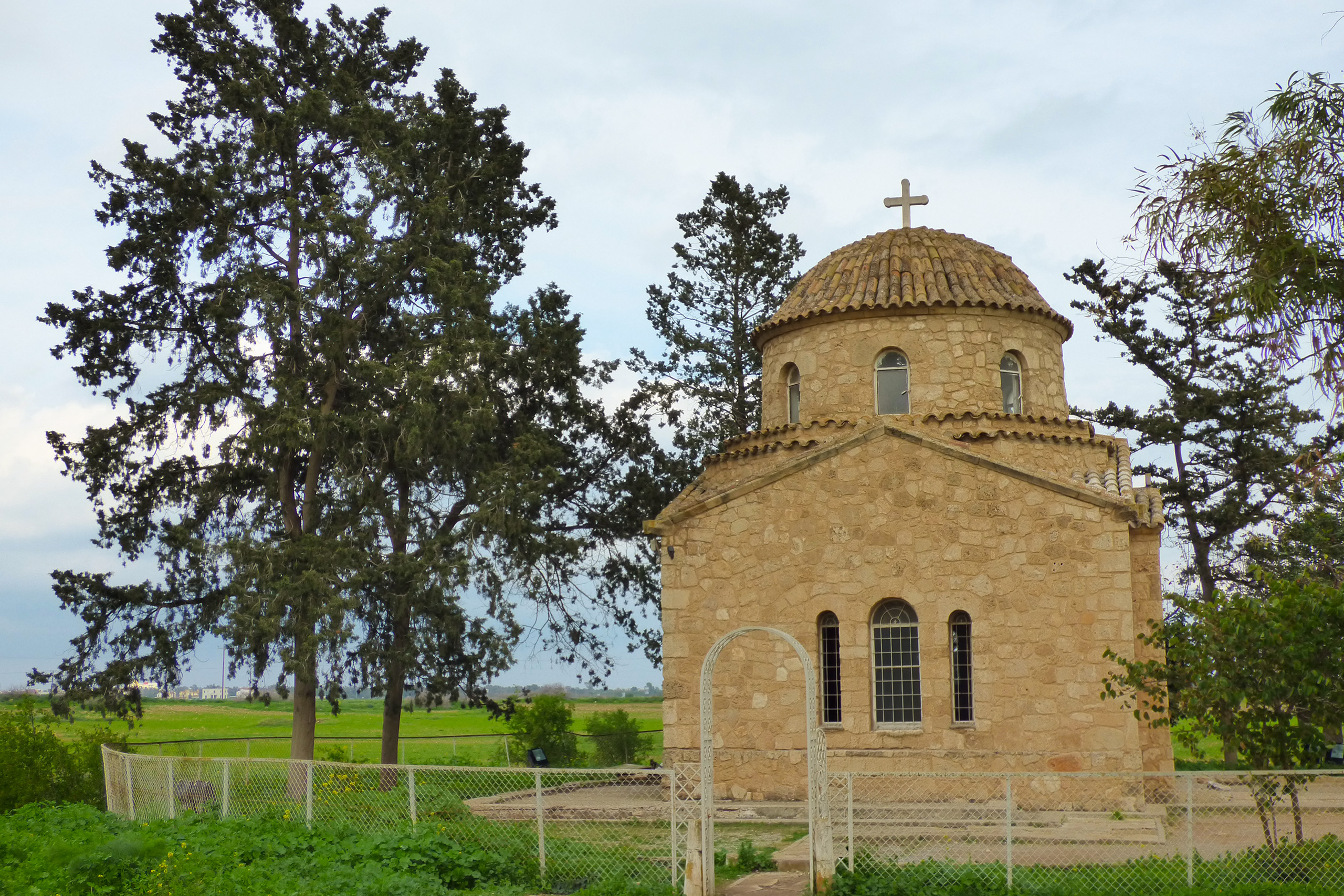
The tomb was found exactly where the vision indicated. Inside, workers discovered a skeleton holding a copy of the Gospel of Matthew. The church historian Theodoros Lector reported that both the relics and the gospel were presented to Emperor Zeno, who received them with great joy and had the gospel covered in gold and jewels. The discovery was considered miraculous proof of Cyprus’s apostolic foundations.
Modern History and Museums
Between 1971 and 1974, only three monks resided in the monastery. Chariton, Stephanos, and Barnabas earned their living by selling honey and painting icons. Following the Turkish invasion of Cyprus in 1974 and the division of the island, the monastery was abandoned when the monks departed. The site is located in the Turkish-occupied part of Cyprus and has been maintained by Turkish Cypriot authorities since that time.
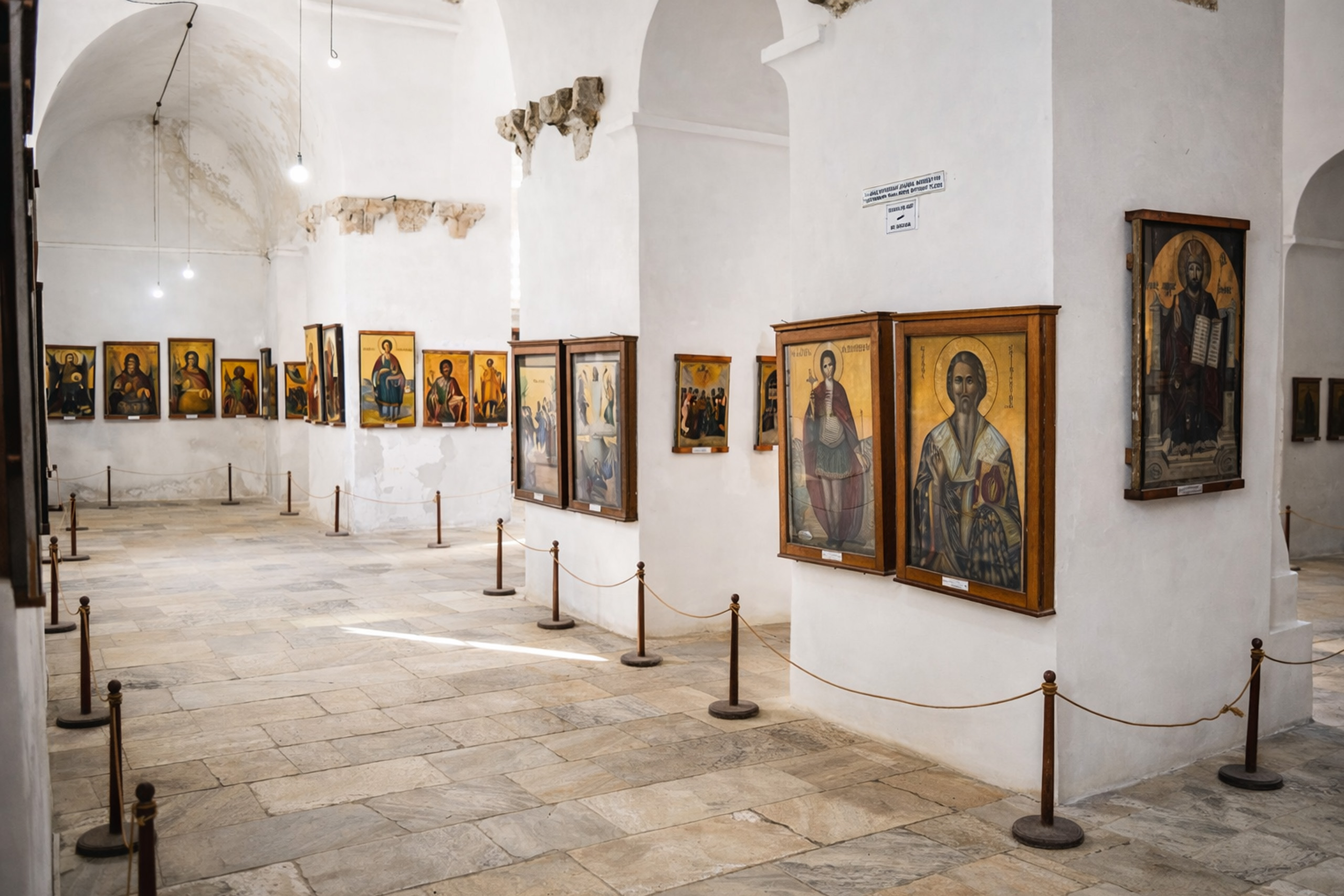
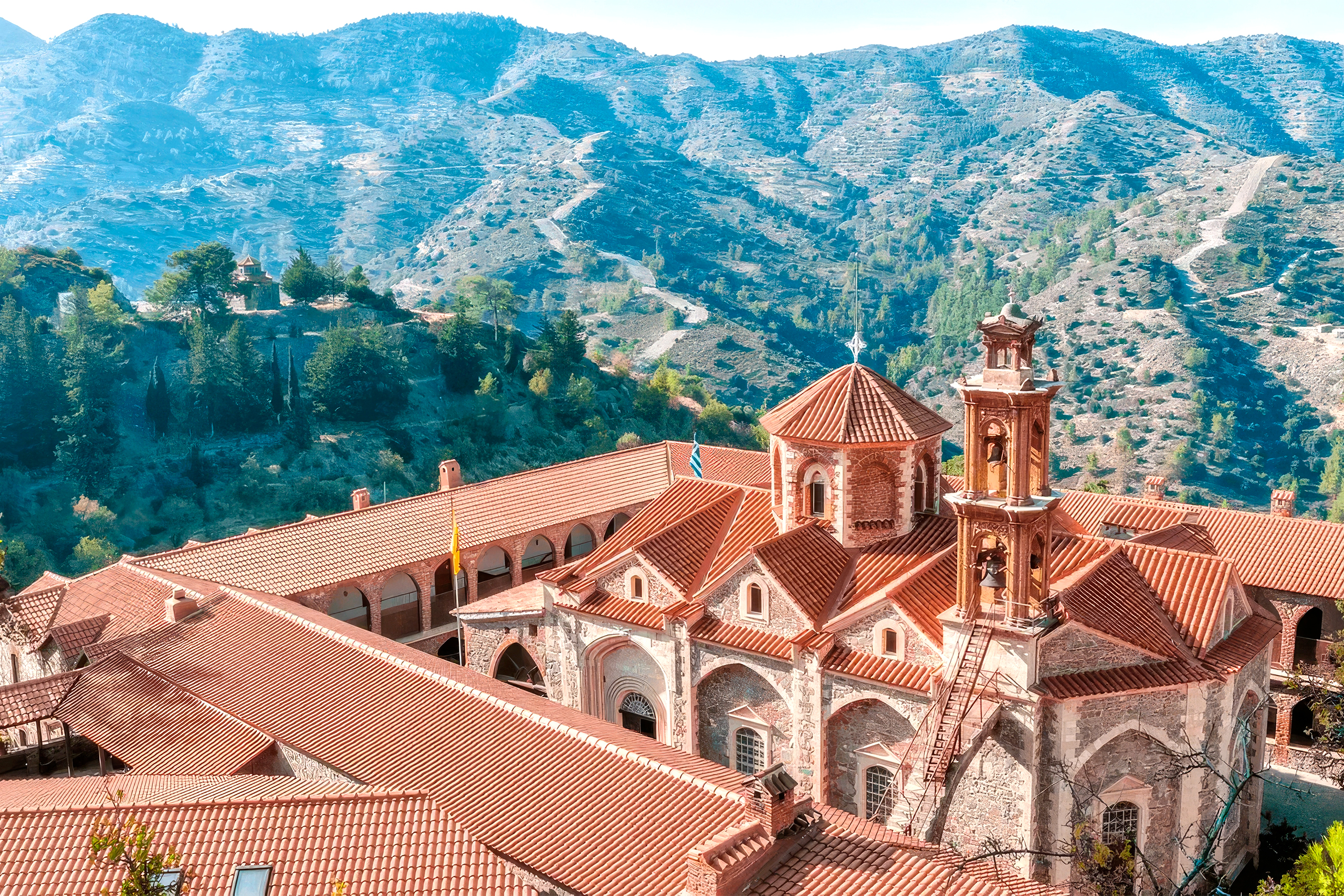
In 1991, a restoration project transformed the complex into a museum. The church building now functions as an icon museum, displaying a collection of 18th-century icons and religious art that provides insight into Cypriot Orthodox traditions. The painted and gilt icons, along with wooden lecterns and pews, remain exactly as they were when the last monks left.
Visiting the Monastery
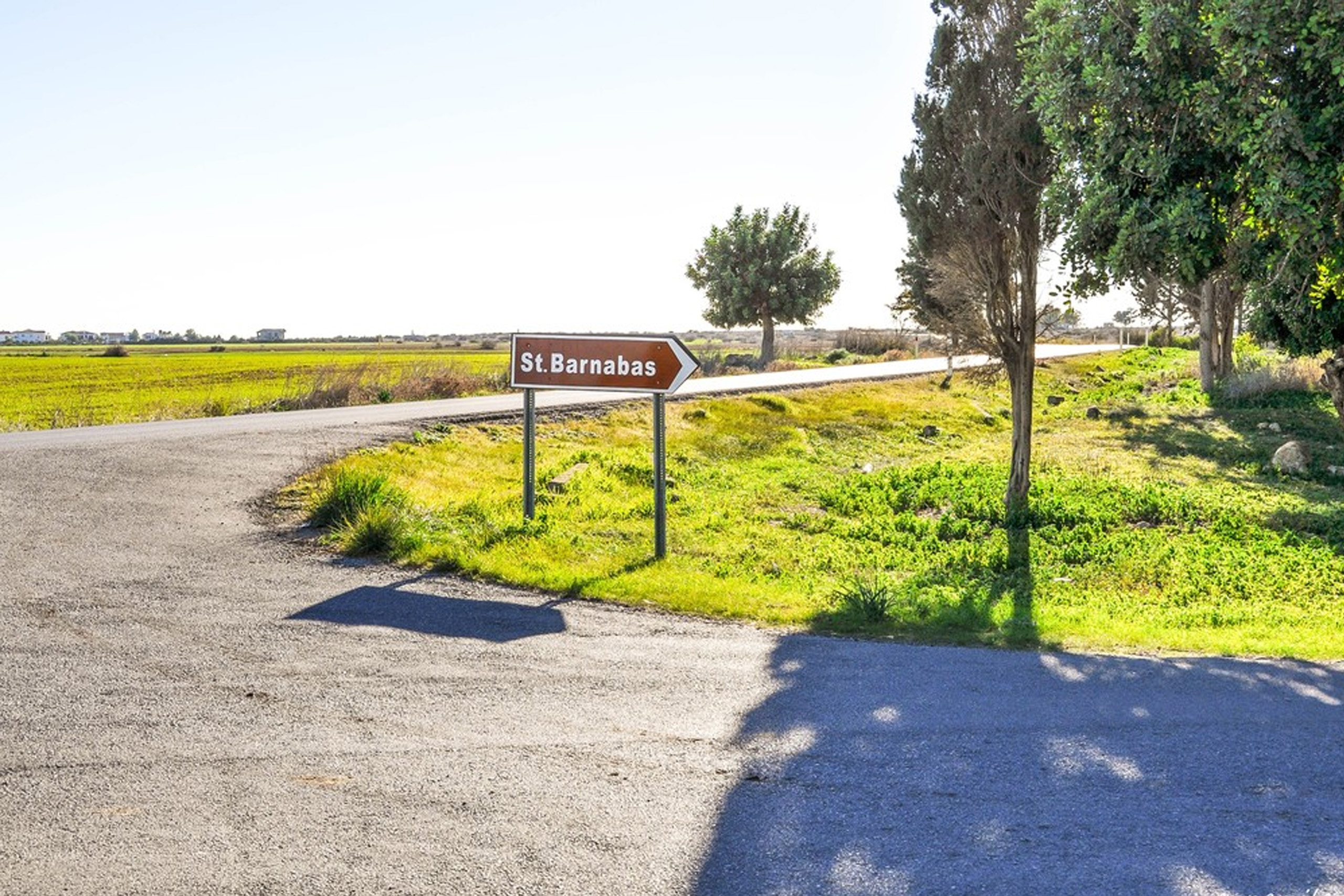
The Monastery of Saint Barnabas is located near Tuzla village, approximately 6-8 kilometers west of Famagusta and 2 kilometers from the ancient city of Salamis. The site is accessible from the Republic of Cyprus through the Ledra Palace or Agios Dometios crossing points in Nicosia. Visitors need a passport or EU identity card to cross the Green Line.
The complex is open daily with modest entrance fees covering both the icon museum and archaeological museum. Guided tours are sometimes available and provide valuable context about the saint’s life and the monastery’s history. The church interior features frescoes illustrating the bishop’s dream, the discovery of the body, and the presentation of the gospel to Emperor Zeno.
The tomb chapel requires a separate visit. Visitors descend the 14 steps into the underground chamber where the body was found. The cave maintains a cool temperature year-round and creates an atmosphere conducive to reflection on the early Christian martyrs who died for their faith.
Why Saint Barnabas Matters Today
Saint Barnabas represents the apostolic foundation of Christianity in Cyprus and the establishment of the Cypriot Orthodox Church as an independent institution. His role in converting the first Christian ruler made Cyprus a pioneer in Christian governance.
The discovery of his tomb in 477-478 AD proved decisive in securing the church’s independence from Antioch. Without this miraculous intervention, the Cypriot church might have been subordinated to external authority and lost its financial independence. The autocephalous status allowed it to survive through centuries of foreign rule and maintain its role as a guardian of Greek-Christian heritage.
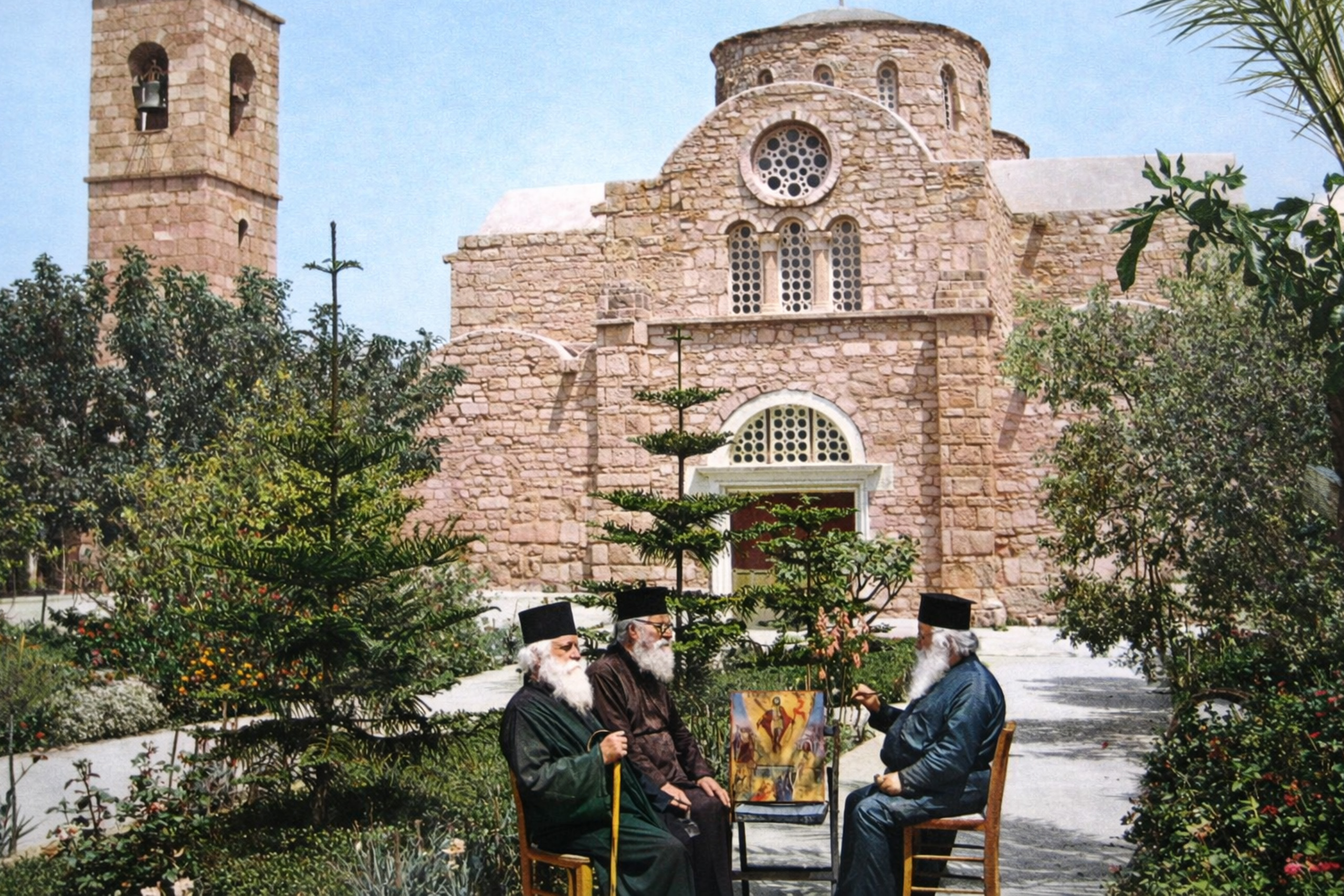
For modern Cyprus, Saint Barnabas serves as a unifying figure whose legacy transcends the island’s current political divisions. Both Greek and Turkish Cypriots recognize the historical and cultural significance of the monastery, and the site attracts visitors from both communities. The saint’s feast day celebrations that resumed after 2005 demonstrate how shared religious heritage can bridge contemporary conflicts.