 English
 Greek
Greek German
 Russian
Agios Lazaros Church stands in central Larnaca, one of the most significant Christian sites in Cyprus. This Byzantine church was built in the late 9th or early 10th century over the believed tomb of Saint Lazarus. Lazarus of Bethany was the man Jesus raised from the dead after four days in the tomb, as described in the Gospel of John.
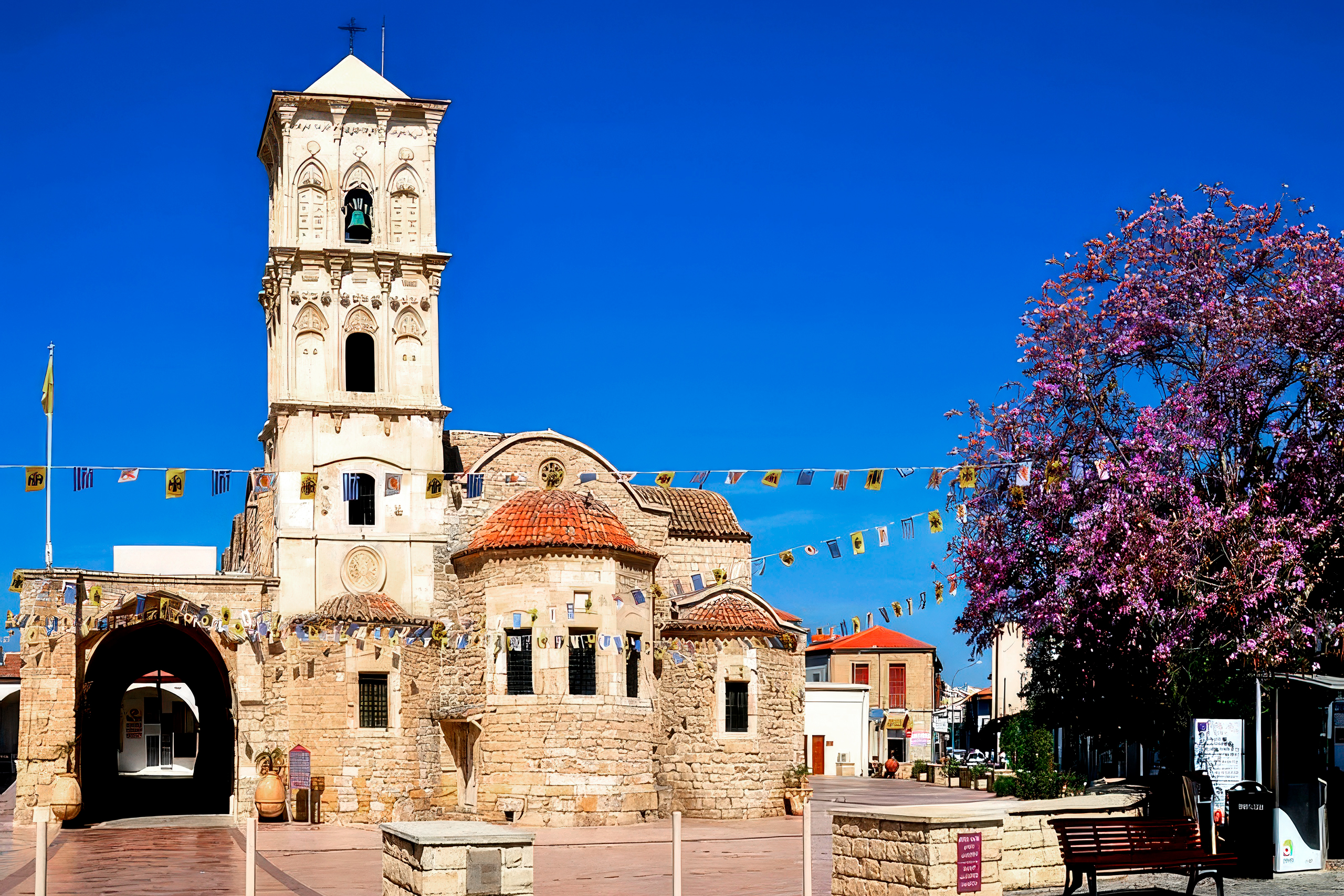
According to Eastern Orthodox tradition, Lazarus fled Judea after his resurrection due to threats on his life and came to Cyprus, where Paul the Apostle and Barnabas appointed him as the first Bishop of Kition. He lived for thirty more years and was buried there for the second and last time. The church measures approximately 31.5 by 14.5 meters and was constructed primarily from limestone. Built by Byzantine Emperor Leo VI, it remains one of the oldest and most important churches on the island.
- Historical Background
- Architectural Features and Transformation Through History
- The Magnificent Baroque Iconostasis
- The Remarkable 1972 Discovery
- A Unique Tradition in Cypriot Orthodox Practice
- The Annual Lazarus Saturday Celebration
- Visiting the Church of Saint Lazarus
- Why This Church Matters to Cyprus
Historical Background
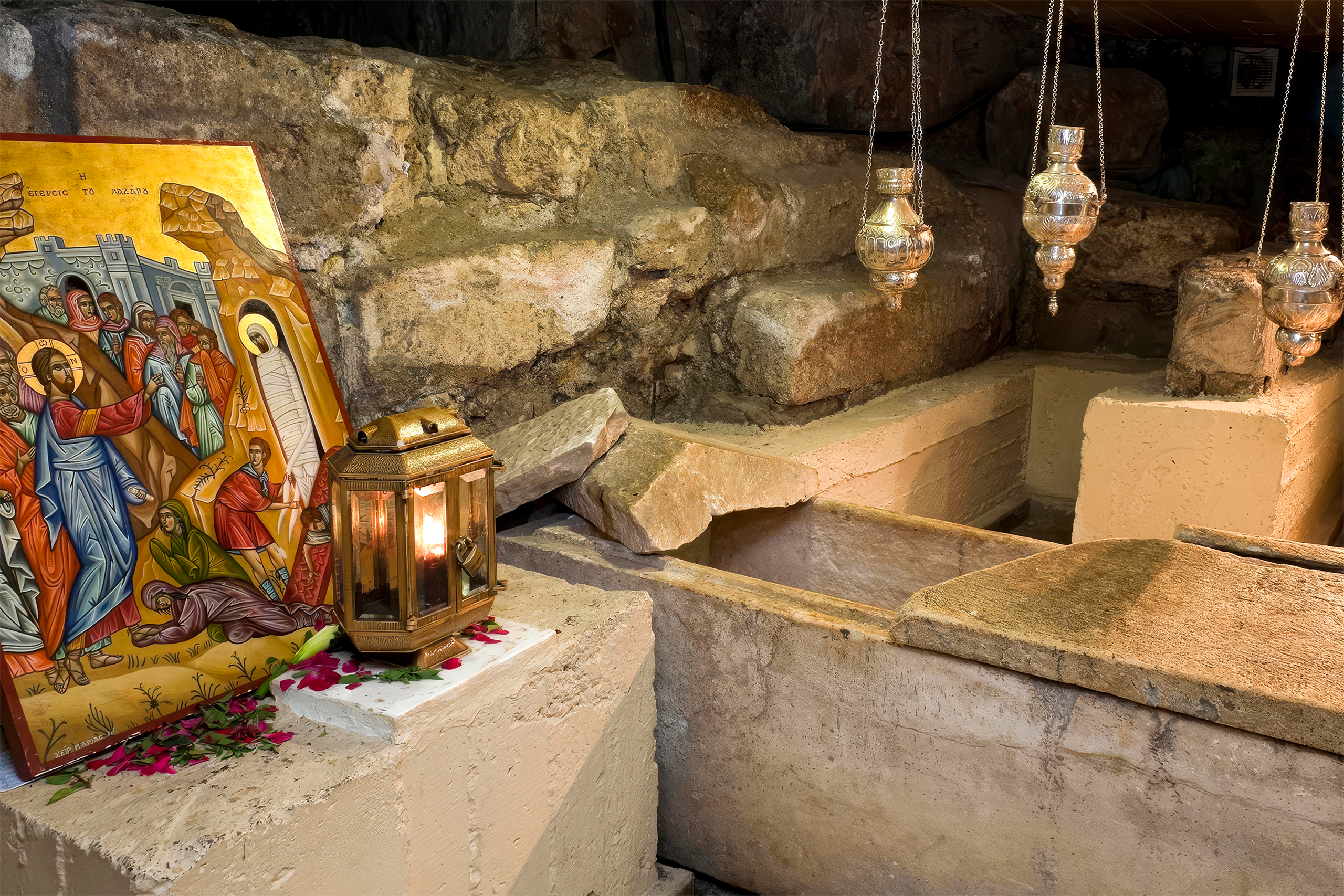
The location of Lazarus’s tomb was believed to have been lost under Arab rule of the island from 649 AD. In 890, a tomb bearing the inscription “Lazarus, four days dead, friend of Christ” was discovered in Larnaca. In 898, Byzantine Emperor Leo VI had Lazarus’s remains transferred to Constantinople.
The transfer was apostrophized by Arethas, Bishop of Caesarea, and is commemorated by the Orthodox Church each year on October 17. In recompense to Larnaca for the translation, Emperor Leo had the Church of St. Lazarus erected over Lazarus’s tomb in the late 9th to early 10th centuries.
It is one of three Byzantine churches which have survived in Cyprus, the other two being the Church of the Apostle Barnabas near Salamis and the church built in the walkway leading from the Epiphanios to the font. After Constantinople fell to the Crusaders of the Fourth Crusade in 1204, the remains were taken to Marseille and later lost. However, some relics remained in Larnaca, as later discoveries would prove.
Architectural Features and Transformation Through History
The interior structure divides into three aisles with bulky double pillars and arched openings going through them. These pillars bear the weight of the domes, thus forming the central aisle while the north and south aisles bear a semi-cylindrical roof, intersected by cross-vaults.
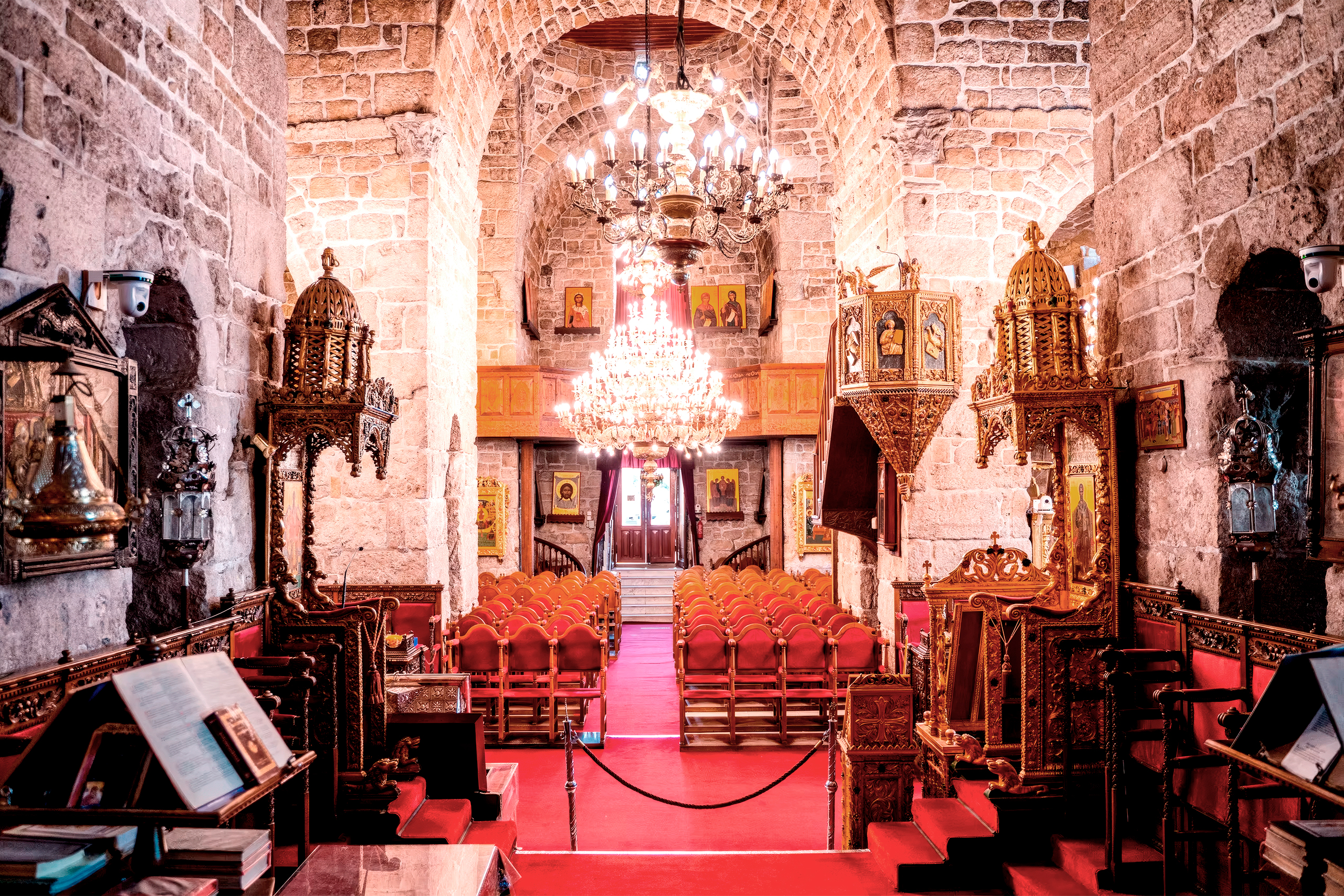
The church originally featured three domes, making it one of only two three-domed churches in Cyprus, the other being the church of the monastery of Saint Barbara near Famagusta. The three imposing domes of this Orthodox Basilica Church and the original bell tower were destroyed, probably in the first years of Ottoman rule starting in 1571, when the church was turned into a mosque.
In 1589, the Ottomans sold it back to the Orthodox, probably because of its Christian cemetery. For the next two hundred years it served both Orthodox and Catholic congregations. The porch bears traces of Greek, Latin, and French inscriptions. In 1857, after the Ottoman authorities again allowed Cypriot churches to have bell towers, the church’s bell tower was rebuilt in a Latinate style. Under Frankish and Venetian rule from the 13th to 16th centuries, the church became Roman Catholic and a stone covered portico of Gothic style was added on its south side.
The Magnificent Baroque Iconostasis
The woodcarving of the unique Baroque iconostasis was done between 1773 and 1782 by Chatzisavvas Taliadorou. The iconostasis was gold-plated between 1793 and 1797. Some of the icons were painted towards the end of the 18th century by Michael Proskynetes from Marathasa. Icon painter Hatzimichael completed the iconography of the iconostasis in 1797.
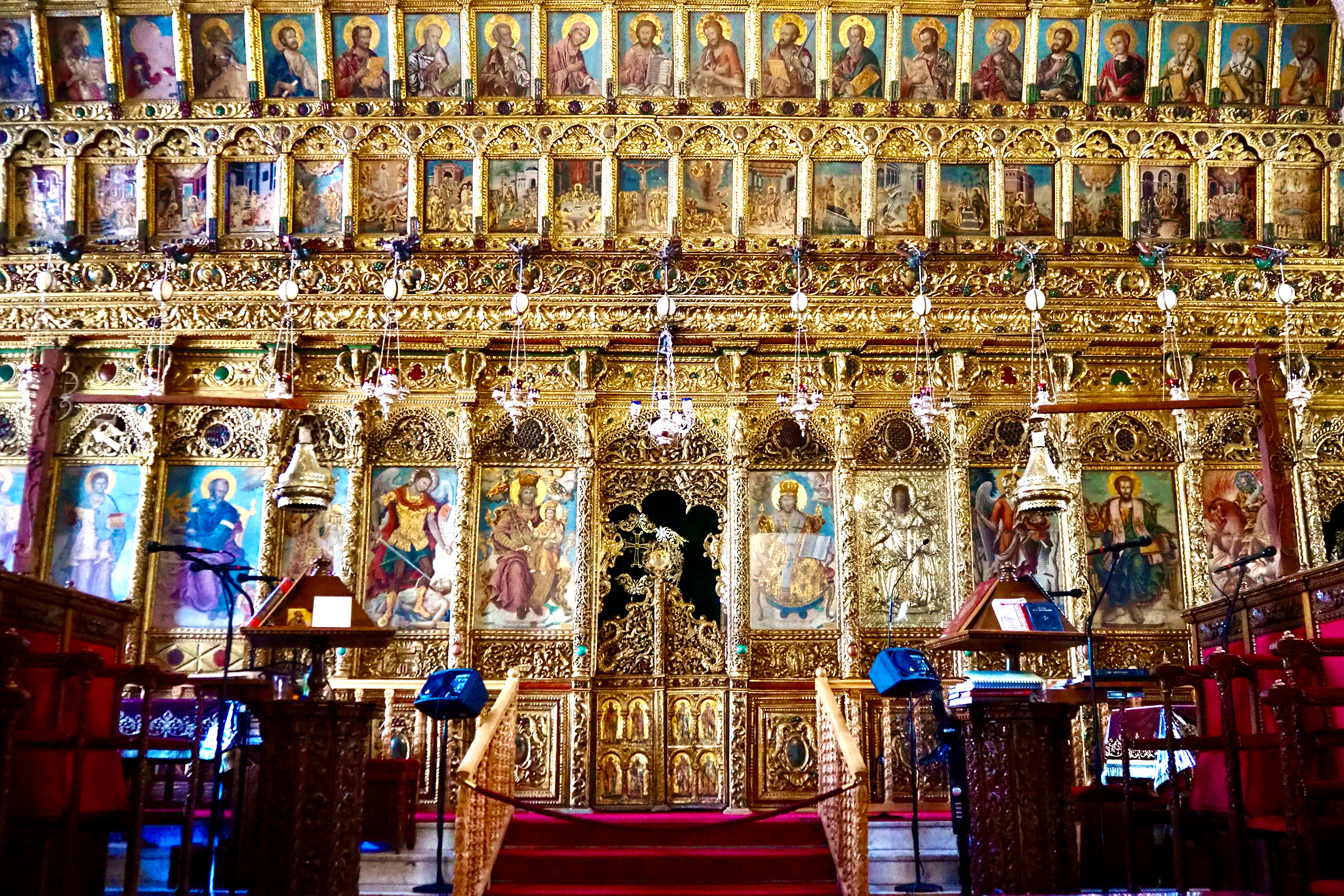
The ornate screen separates the nave from the sanctuary and showcases intricate woodcarving work that represents some of the finest baroque craftsmanship in Cyprus. Some wood-carved furniture from the 17th century remains, including a Rococo pulpit on one pillar that was used for Catholic services.
A fire in 1970 damaged much of the interior, including extensive damage to a section of the iconostasis together with the corresponding icons. The iconostasis has been partially restored and was re-plated with gold between 1972 and 1974. The survival of this golden screen through centuries of political and religious change stands as remarkable proof of the church’s enduring importance.
The Remarkable 1972 Discovery
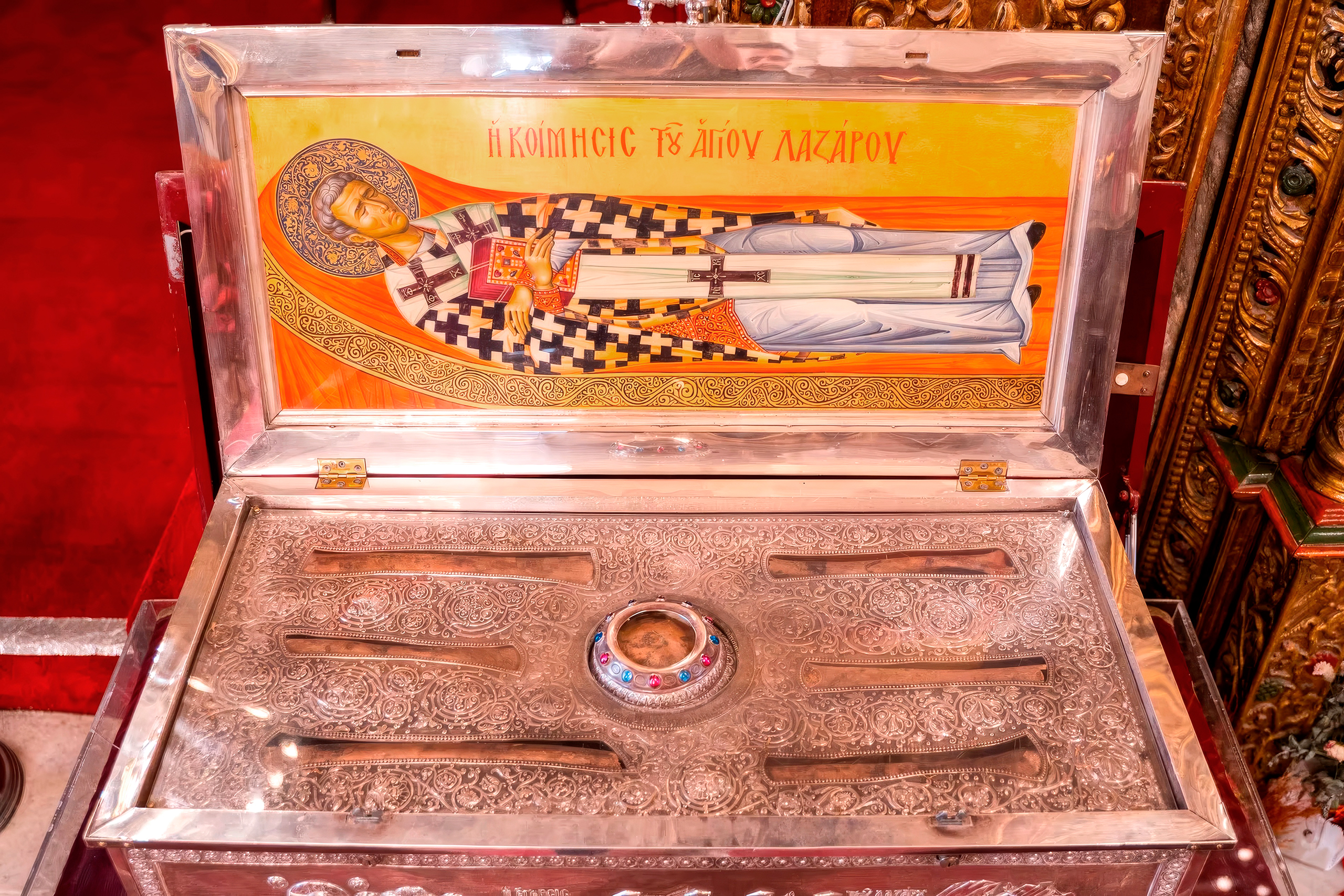
During renovations following the 1970 fire, on November 2, 1972, human remains were discovered in a marble sarcophagus under the altar, and were identified as part of the saint’s relics. This discovery proved that not all of Lazarus’s remains had been transferred to Constantinople in 898.
The marble sarcophagus can still be viewed in the crypt beneath the sanctuary, accessible via a staircase that descends from the main church. This finding generated considerable excitement in both religious and archaeological communities, as it confirmed the church’s status as the genuine burial site of Saint Lazarus.
The bones now rest in a gold-plated casket within the church, where pilgrims can pay their respects. According to tradition, the Virgin Mary herself visited Lazarus while he lived in Cyprus and presented him with the bishop’s omophorion and epimanikia that she had woven. Another tradition states that during his thirty years after resurrection, Lazarus never smiled except once, when he saw someone stealing a clay pot and remarked that the clay steals the clay.
A Unique Tradition in Cypriot Orthodox Practice
All episcopal thrones in Larnaca have the icon of St. Lazarus instead of Christ, which is the standard custom of the church. This distinctive practice recognizes Lazarus’s role as the first Bishop of Kition and reflects the deep connection between Larnaca’s religious identity and the saint.
The Church of Cyprus, an autocephalous Greek Orthodox Church, considers the Church of Saint Lazarus among its most important sites. The connection between ancient Kition and Saint Lazarus places Larnaca alongside other major Christian centers in the early spread of Christianity.
Larnaca ranks as historically connected with three important personalities of the ancient world: the Stoic philosopher Zeno who was born there, the Athenian general Kimon who died there while fighting against the Persians, and Saint Lazarus who lived there as the first bishop. The church represents the tangible link between biblical events and Cypriot soil, making it essential to understanding how Christianity took root on the island.
The Annual Lazarus Saturday Celebration
On Lazarus Saturday, eight days before Easter, the icon of Saint Lazarus is taken in procession through the streets of Larnaca. This celebration draws thousands of worshippers and visitors who participate in one of Cyprus’s most important religious festivals. The procession moves through the old town, accompanied by church officials, choir members, and local residents. Traditional chants fill the streets as the icon makes its way through Larnaca’s historic center.
The church celebrates this feast with particular reverence, as it marks the miracle that brought Lazarus to Cyprus in the first place. Many Cypriots maintain strong devotion to Saint Lazarus, viewing him as both a biblical figure and a local patron who established Christianity in their city. The church serves as an active place of worship, with regular services conducted throughout the week. The blend of religious devotion and cultural celebration during Lazarus Saturday demonstrates how ancient traditions continue to shape modern Cypriot identity.
Visiting the Church of Saint Lazarus
The church occupies its own square in central Larnaca, roughly a ten-minute walk from the Finikoudes promenade. The site remains open to visitors year round, with operating hours Monday to Friday from 08:00 to 12:30 and 14:30 to 17:30, and Saturday and Sunday from 08:00 to 17:30. Entrance is free, though modest dress is required as the church functions as an active place of worship.
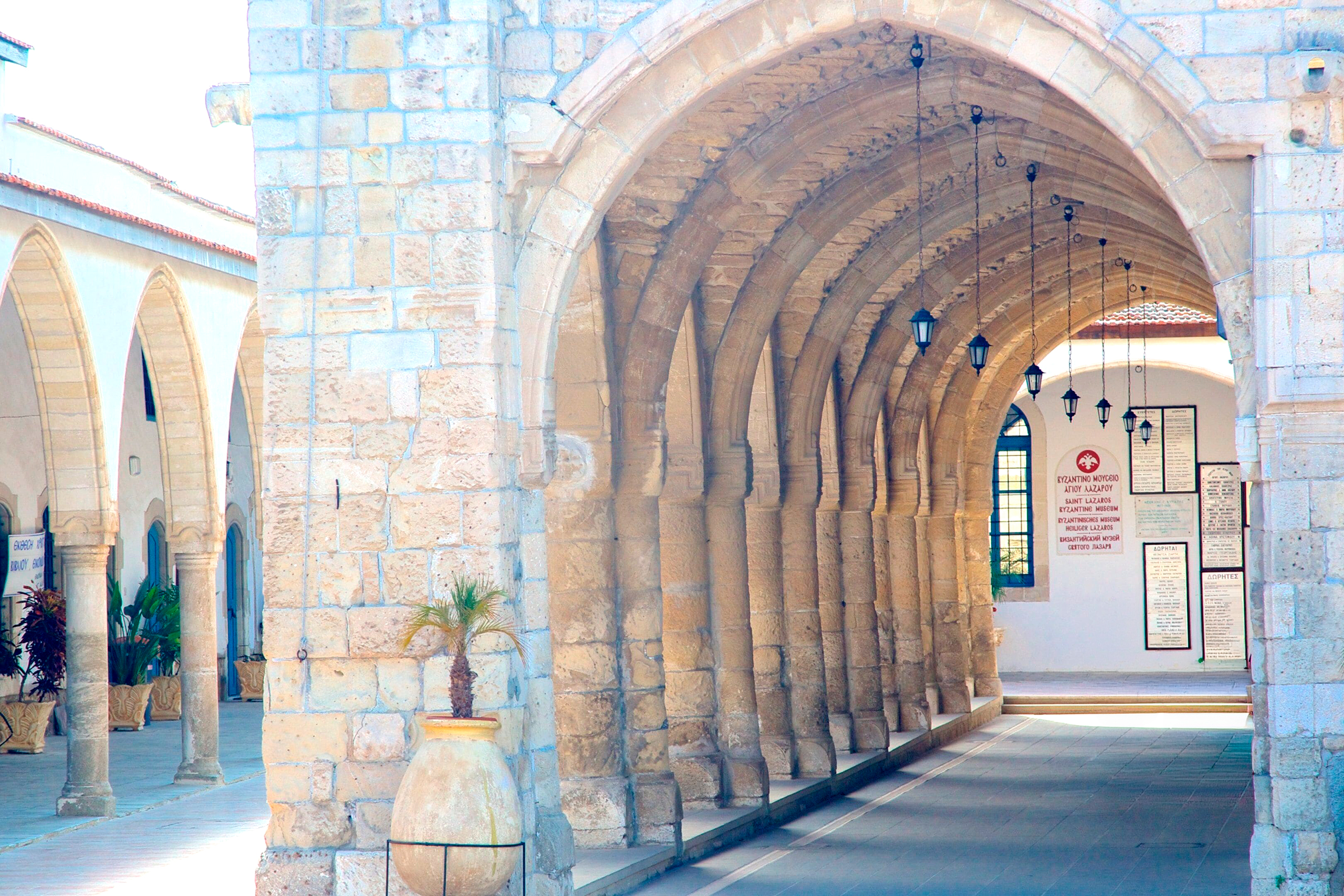
Visitors descend steps from the open porch to enter the main church. The crypt containing the tomb can be accessed via a separate staircase. Photography is generally permitted but should be done respectfully and without flash.
A Byzantine Museum operates next to the church, housed in some of the cells of the hypostyle porch on the south side, displaying religious icons, artifacts, and relics that provide deeper context to the church’s history. The museum requires a separate small admission fee. The best times to visit are early morning or late afternoon when crowds are smaller and natural light enhances the interior. The church’s central location makes it easily accessible by foot, bus, taxi, or car, with limited street parking available nearby.
Why This Church Matters to Cyprus
Agios Lazaros Church represents direct apostolic connection to the earliest days of Christianity. The presence of Lazarus, personally raised from the dead by Jesus and ordained by Paul and Barnabas, establishes Cyprus as a crucial center in the spread of the Christian faith. The church survived through Byzantine, Frankish, Venetian, and Ottoman periods, adapting to serve different congregations while maintaining its essential identity.
The survival of the baroque iconostasis, the discovery of relics beneath the altar, and the continuity of worship over more than a millennium demonstrate the resilience of faith and tradition. For Orthodox Christians worldwide, this church offers tangible connection to one of the Bible’s most dramatic miracles.
For Cyprus, it anchors Larnaca’s identity as a city where biblical history happened, where apostles walked, and where the foundations of European Christianity were laid. The church stands not as a museum but as a living center of faith that bridges ancient and modern worlds.